

In present times, most couples in India look for simple and less stressful ways to end a difficult marriage. They want a convenient, private, stress-free, faster, and easier way to divorce. This is why most couples prefer to file for divorce online. While divorce in India cannot be completed fully online, the legal system has become more digitalized than before.
In fact, filings and court fee payments are now 100% online in most courts, while evidence submission and trial proceedings are only 5-10% digitalized. This means most of the process can now be started and managed online with a lawyer’s help, while final approval still comes from the court after hearings and verifications.
In this blog, we will be explaining the step-by-step process of filing for divorce online.
Types of Divorces You Can File Online in India
While all divorces can be initiated through the eCourts e-filing portal, the digital processing varies by case type. The possibility to apply for divorce online depends on the type of divorce involved.
Mutual Divorce
If both spouses agree on all terms and agree to divorce peacefully, a mutual divorce can be filed. In mutual divorce, around 60-70% of the entire process can be online. All petitions and documents are filed online, and many metro courts also permit appearances through video conferencing.
Contested Divorce
When there is disagreement between spouses regarding divorce, alimony, property division, or child custody, it is referred to as a contested divorce lawsuit. In such cases, about 15-25% of the proceedings can be digitized.
Although the filing of papers is done online, complex procedures such as cross-examining witnesses and presenting evidence may require in-person attendance in court.
NRI Divorce
When one or both spouses are living abroad, the process can be managed online to around 40-50%. All petitions and documents are filed online. A Special Power of Attorney (POA) is usually given to a representative (close relatives, or a lawyer) in India who handles filings and court visits. You can also utilise video conferencing for remote attendance in a NRI divorce case.

Can You Really File for Divorce Completely Online in India?
The simple answer is that while you can file for divorce online, you cannot get a divorce online. Although the eCourt software provides 100% divorce online filing, uploading documents, and fee payments, a solely digital system cannot grant the divorce. In India, divorce can only be made legal by virtue of an order passed by the Family Court.
It is always a burning question as to how to file for divorce without frequent trips to court. The process of e-filing for divorces means that all papers, affidavits, and documents for the filing of divorce are done online, and no physical trips are necessary at that stage. But there might be a need for some physical submissions when the original document needs verification.
Step-by-Step Process to File for Divorce Online in India
These are the major steps involved in an online divorce application India:
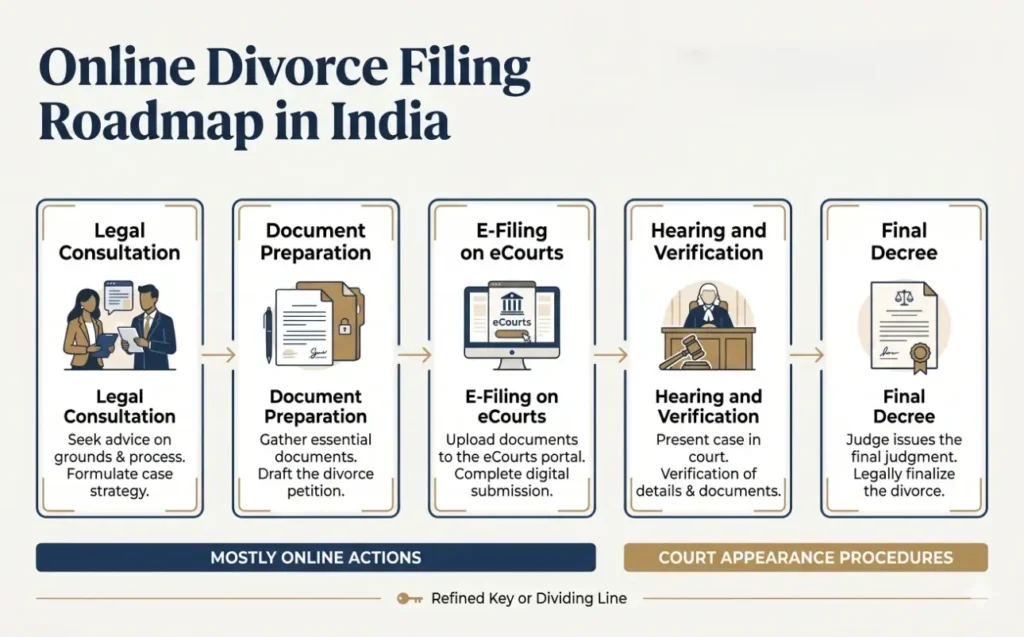
Step 1: Consult a Divorce Lawyer
If you do not understand how to file for divorce, then the best place to start is by contacting a divorce attorney. The consultation could be either online or in person and will determine whether your divorce can be conducted virtually.
Step 2: Drafting & E-Filing
The attorney drafts the petition for divorce and gathers essential documents such as the marriage certificate, identification papers, and financial documents. The documents are then digitized and submitted using the eCourts portal. This is one of the most important stages in the online divorce application India process.
Step 3: Registry Verification & Case Admission
The Family Court registry checks the uploaded documents for mistakes or missing details. Court fees are paid online through government payment portals. Once approved, the courts officially open the case and issue a case number.
Step 4: Court Hearings
The court schedules hearings for appearance. In mutual and NRI divorces, courts may allow video conferencing for recording statements. In contested matters, physical appearance may still be necessary.
Step 5: Final Decree
After completing all legal analysis and verifications, the judge passes the divorce order in a physical courtroom. The final decree can be accessed digitally through court systems. But a certified copy must be taken.
How Online Divorce Filing Actually Works in Practice
In India, many couples searching for how to apply divorce in online are actually referring to this digital filing and hearing process.
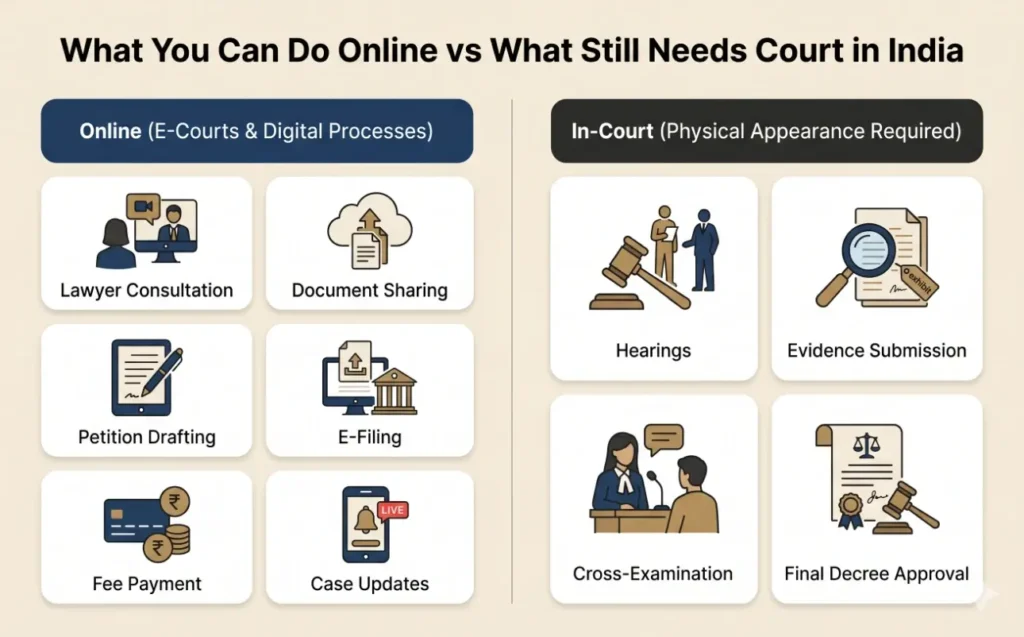
- Lawyer consultation through phone calls, chats, or video calls, to discuss case strategy and how to apply for divorce online without visiting the office.
- Digital document sharing through emails or WhatsApp to the lawyer.
- Electronic filing of petitions through eCouand makings the payment using government portals.
- Video conferencing via software and platforms like Zoom, Cisco Webex, and Gmeet.
- Electronic communications through SMS and email notifications for case admissions, registry errors, and next hearings.
Required Documents for Online Filing
Before you apply for divorce online, certain important documents must be collected and uploaded through the eCourts portal.
- Marriage Proof: Marriage certificate or registration certificate, marriage photo, marriage video, etc.
- Identification & Residence Proof: Aadhar card, passport, voter ID, or utility bills.
- Pictures: Recent passport size pictures, marriage photographs, and couple photographs.
- Financial Details: Bank statements, income certificates, salary receipts, information regarding property, loans, etc.
- Separation Proof: Separate rent agreements, chat messages/proof, etc.
- Divorce Settlement Agreement: If the divorce is mutual, then an agreement document should be drafted by the spouses stating their conditions about the custody of the children, visiting rights, asset distribution, and collection of stridhan.
- Power of Attorney: In case of divorce proceedings for NRI couples, it becomes necessary for the spouse residing abroad to file a POA in his/her relative or lawyer’s name.
Common Mistakes to Avoid When Filing Divorce Online
Make sure that your paperwork stays within legal requirements by not doing the following:
- If the court case is filed in an incorrect jurisdiction, then the case will be rejected or returned to you. Therefore, make sure you hire a divorce lawyer.
- Using scans of blurry documents instead of uploading high-quality images above 200 DPI.
- Not serving the other party with legal notice or summons in the prescribed way.
- Signing papers that include the terms of the settlement without first consulting a lawyer.
- Making any verbal agreements on alimony, custody, or property distribution.
- Skipping any virtual court hearing is meant especially for your convenience.
- Trusting fake websites that promise instant/online divorce certificates.
- Ignoring tax and stamp duty issues in financial disclosure, property division, or alimony.
Conclusion
Online filing of divorce in India has made the procedure easy, well-organised, and less tiring. Even if a divorce cannot be done completely online, all primary steps, including the filing of documents, e-filing, and paying fees, can now be done online using the eCourts portal. Mutual divorces and NRI divorces, especially, have become much easier through virtual proceedings.
Nevertheless, legal counseling is much more crucial when filing for divorce on the internet, to prevent any errors that may cause delays and also fraudsters who try to exploit you. It must be understood that the only institution authorized to grant divorces is the Family Court.
If you want to file for divorce online and need clear legal guidance, consult G.S. Bagga & Associates. We provide professional assistance with mutual consent divorce, contested divorce, NRI divorce matters, child custody, alimony, and online divorce filing procedures across India.