

Marriage in India is not just a personal choice. It is an important part of our culture, traditions, and family values. Couples enter this bond with the hope of building a life together, but sometimes reality is very different from expectation.
Marriage in India is not just a personal choice. It is a part of our culture and the way our families live. When people get married in India they want to build a life. Sometimes what really happens is not what they thought it would be. Marriage in India is an important thing and it affects our family values and traditions.
For some, marriage can bring unbearable challenges. Cruelty, domestic violence, fraud, or even forced marriage can destroy trust and safety. In such painful circumstances, many people begin to ask: Can divorce be filed within one year of marriage? Or can I get divorce within one year of marriage if the situation becomes unbearable?
The law generally prohibits filing for divorce before completing one year of marriage. This rule is meant to give couples time to adjust and resolve differences. However, Indian courts recognize that not every situation can wait. If a spouse is facing extraordinary hardship or exceptional difficulties, judges have the power to allow an early divorce.
In this blog, we will explain how divorce within one year can be granted, the legal grounds recognized, the process involved, the time it usually takes, and other important details that everyone should know.
What Does Indian Law Say About Divorce Within One Year?
Under Section 14 of the Hindu Marriage Act, 1955, Indian law says that spouses usually cannot file a divorce petition before one year of marriage. The reason for this rule is to:
- Prevent emotional or sudden divorces
- Give couples time to settle disputes
- Protect the institution of marriage
But the law also knows that some marriages become too much to handle quickly. In cases the court may allow an early divorce if:
- One spouse is facing extreme difficulty
- Extremely wrongful behavior by the other spouse
Can Mutual Consent Divorce Be Filed Within One Year?
In India, mutual consent divorce also needs one year of marriage to pass.
Under Section 13B of the Hindu Marriage Act:
- The couple must have lived separately for at least one year
- Both spouses must agree that the marriage cannot continue
Because of this, mutual consent divorce within the first year of marriage is generally not permitted. Therefore, divorce in one year of marriage through mutual consent is usually not allowed unless the court grants special permission in exceptional circumstances.
This way couples do not rush into divorce decisions. At the same time, it helps couples in genuinely serious situations get the legal relief they need.

Grounds for Divorce Within One Year of Marriage
In India the courts can let people get a divorce after one year of being married. This can happen if one of the spouses is going through a tough time. The Indian courts consider things like pain, physical hurt, mental problems or money troubles. They also look at cases of cruelty, abuse or when someone has been cheated.
If something bad is happening the courts can help the person in a hurry. The Indian courts do this when they think it is absolutely necessary. The person can get a divorce within one year of marriage if they are facing problems, like these.
1. Domestic Violence or Cruelty
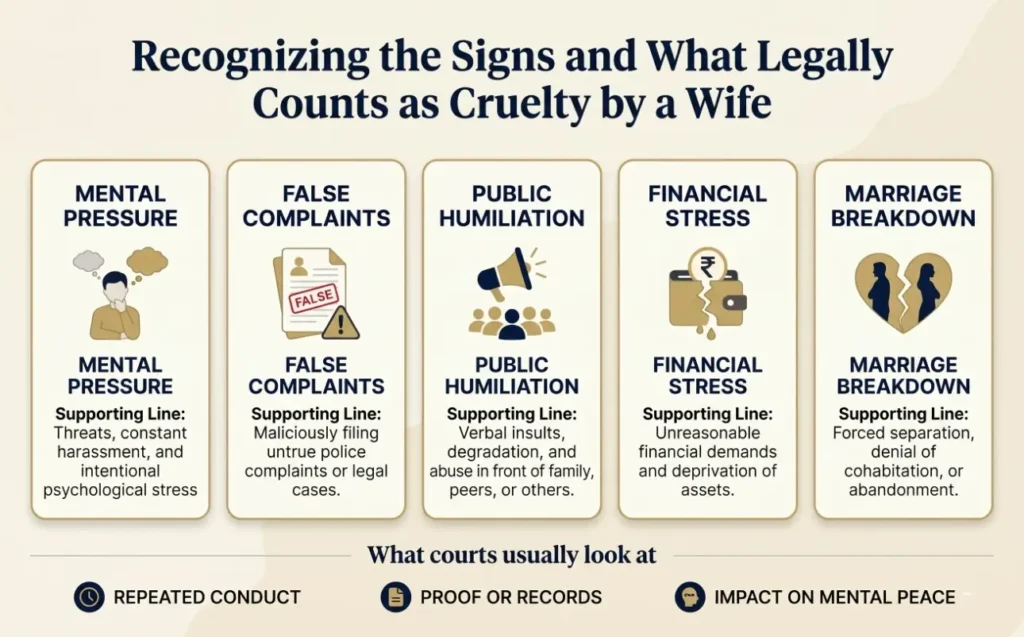
Cruelty is one of the strongest grounds for divorce. It may include:
- Physical abuse
- Mental harassment
- Emotional torture
- Threats or intimidation
The court has the power to make an exception to the one year waiting rule if the situation with the court case is extremely serious.
2. Dowry Harassment
If a spouse or in-laws demand dowry, threaten the bride, or harass her mentally, the court may consider it exceptional hardship.
The affected spouse can also take action like:
- Filing a domestic violence case
- FIR under dowry laws
- Maintenance claims
3. Fraud or Concealment Before Marriage
If important facts were hidden before marriage it can be a reason for annulment or early divorce.
Examples include:
- Existing marriage
- Serious medical condition
- Criminal history
- False identity or fake qualifications
- Hidden impotence or infertility
4. Forced Marriage
If a person agrees to marry only because they are scared, threatened, or forced by someone, that marriage can be challenged in court. For a marriage to be valid, both people must give their free and willing consent. If someone said “yes” under pressure or fear, the court may decide that the marriage is not legally valid.
5. Adultery or Abandonment
If one spouse is involved in an extramarital affair or leaves after getting married without a good reason the court may see it as very bad behavior. This kind of thing can really hurt the person’s feelings. A spouse’s behavior like this can cause a lot of pain. It might even be a reason to get a divorce or some other kind of help. The court takes serious actions on this kind of behaviour.
Difference Between Divorce and Annulment
Many people get confused between divorce and annulment. They are not the same thing. Divorce is when a marriage ends and Annulment is when the marriage is declared invalid. Let’s understand the difference in a simpler way:
| Aspect | Divorce | Annulment |
| Meaning | A divorce ends a marriage that was legally valid | An annulment says that the marriage was invalid from the beginning |
| Effect | A divorce says the marriage existed but is now over | An annulment says the marriage never legally existed |
| Grounds | You can get a divorce because of things like cruelty, desertion, adultery or mental disorder | You can get an annulment because of things, like fraud, impotency or a forced marriage |
| Suitability | A divorce is used when a valid marriage has broken down | An annulment is used when the marriage was never valid or could be ended |
| Outcome | Parties become legally divorced | Parties are considered never to have been legally married |
How to File for Divorce Within One Year: Step-by-Step Legal Process
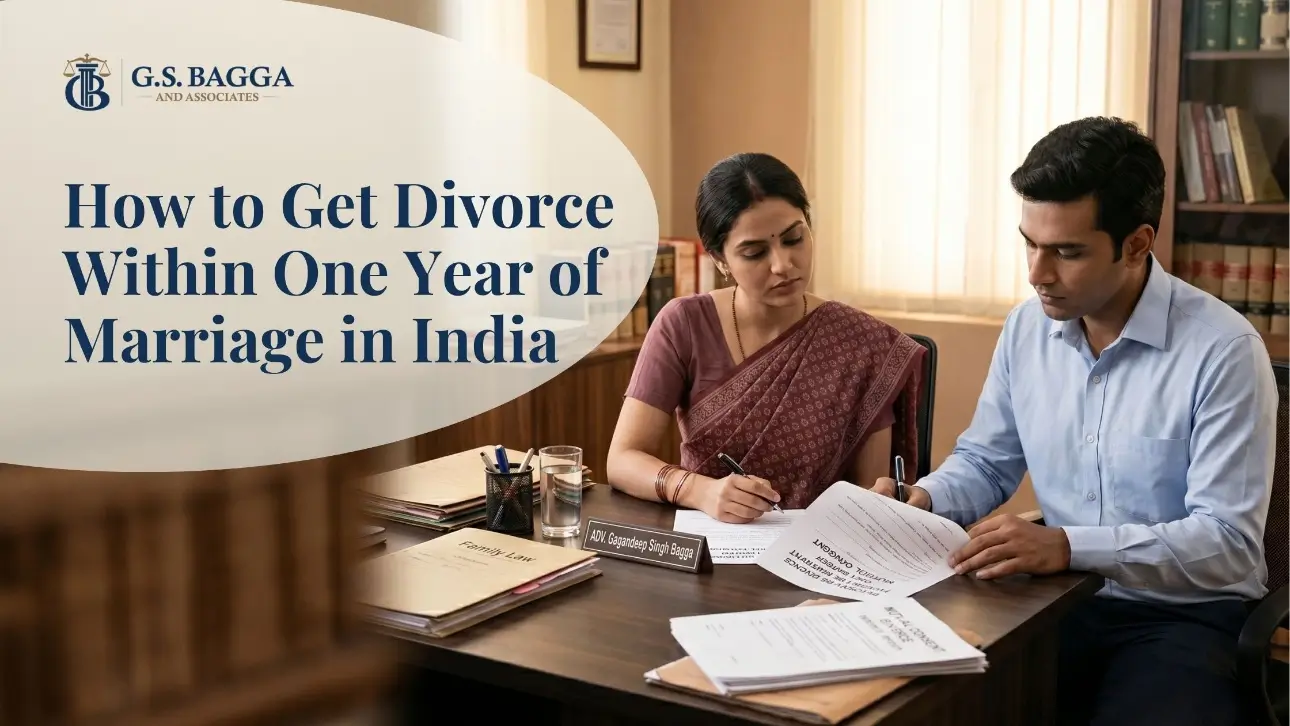
Step 1: Consult a Family Lawyer
A lawyer checks whether the case qualifies as:
- Exceptional hardship
- Exceptional depravity
- Annulment
- Domestic violence matter
Step 2: File Permission Application
Before filing the divorce petition, an application seeking court permission must be submitted.
The application should explain:
- Serious suffering
- Cruelty or misconduct
- Why immediate divorce is necessary
Step 3: Submit Supporting Evidence
Strong evidence is very important. Common evidence includes:
- WhatsApp chats
- Medical reports
- Police complaints
- Photos or videos
- Audio recordings
- Witness statements
- Threat messages
Step 4: Court Review
The family court examines whether the situation truly qualifies as exceptional.
The judge may:
- Allow the petition
- Reject the request
- Suggest mediation or reconciliation
Step 5: Divorce Proceedings Begin
If permission is granted, the regular divorce proceedings continue according to law.
This may include:
- Filing replies
- Evidence stage
- Cross-examination
- Final arguments
- Divorce decree
Important Documents Required For Early Divorce Filing
When seeking permission to file for divorce within one year of marriage, courts require strong documentation to support the case. The following documents are usually needed:
- Marriage certificate
- Wedding photographs
- ID proof (such as Aadhaar, Passport, or PAN card)
- Address proof (utility bills, rental agreement, etc.)
- Evidence of cruelty or harassment (medical records, police complaints, threat messages, etc.)
- Income documents (salary slips, bank statements, tax returns)
- Communication records (WhatsApp chats, emails, call logs)
How Much Time Does Divorce Within One Year Take in India?
The duration of divorce proceedings within one year of marriage depends on the facts of the case, court procedures, and whether both spouses agree to the separation.
Mutual Consent Divorce
- If both parties agree and the court permits early filing due to exceptional hardship, the process may take around 6–12 months.
- In some cases, the 6‑month cooling‑off period may also be waived, making the process faster.
Contested Divorce
- If one spouse opposes the divorce, the case may take 1–3 years or more, depending on:
- The strength of evidence
- Number of hearings
- Court workload
For example; If a spouse faces domestic violence, severe cruelty, fraud, or abandonment soon after marriage, the court may allow divorce proceedings before one year.
There is no fixed timeline for early divorce cases in India. Mutual settlements are generally quicker, while contested cases usually take longer due to detailed hearings and evidence review.
Can the 6-Month Cooling-Off Period Be Waived?
The 6-Month Cooling-Off Period is in place to give couples time to think about their decision and to see if they can work things out. In some cases courts are able to waive the 6-Month Cooling-Off Period for couples who want a mutual consent divorce. If the court thinks that the marriage is really over and that the couple will not get back together they might waive the waiting period.
For example if a couple has been living apart for a time and they have already figured out things like who gets what and who takes care of the kids and they both agree that they want a divorce the court might let them get a divorce sooner.
It really depends on what’s going on in each individual case and it is up to the family court to decide what to do with the 6-Month Cooling-Off Period.
Can Maintenance or Alimony Be Claimed?
Yes. A spouse can claim maintenance or alimony even in divorce cases filed within one year of marriage. The court considers factors such as:
- Income of both spouses
- Financial dependency
- Standard of living during marriage
- Circumstances of the case
For example; If a wife is financially dependent on her husband and unable to support herself after separation, she may seek:
- Interim maintenance during the divorce proceedings
- Permanent alimony after the divorce decree
In certain situations, husbands may also claim maintenance if they are financially dependent and legally eligible.
Practical Advice Before Filing For Divorce
Before filing for divorce, it is important to understand the legal, emotional, and financial impact of the decision. Couples should carefully evaluate whether reconciliation is possible and seek legal advice to understand their rights and options.
Important Things to Consider:
- Keep important documents and evidence safely.
- Understand issues related to maintenance, custody, and property.
- Avoid making decisions in anger or pressure.
- Consult an experienced family lawyer before starting legal proceedings.
Taking informed decisions can help avoid unnecessary complications during the divorce process.
Conclusion
Many marriages face serious problems within the first few months itself due to cruelty, abuse, incompatibility, fraud, or constant disputes. In such situations, couples often believe they must remain legally married for one full year, but Indian law does provide exceptions in genuinely serious cases.
Courts carefully examine the facts, reasons, and evidence before allowing divorce within one year of marriage. Whether it is a mutual consent divorce or a contested matter, understanding the correct legal process is important before taking any legal step.
If you are facing difficulties in your marriage and considering early divorce, getting proper legal guidance can make the process easier to understand. GS Bagga and Associates can help you understand your legal options in simple terms and guide you step by step with clarity, support, and practical advice.