


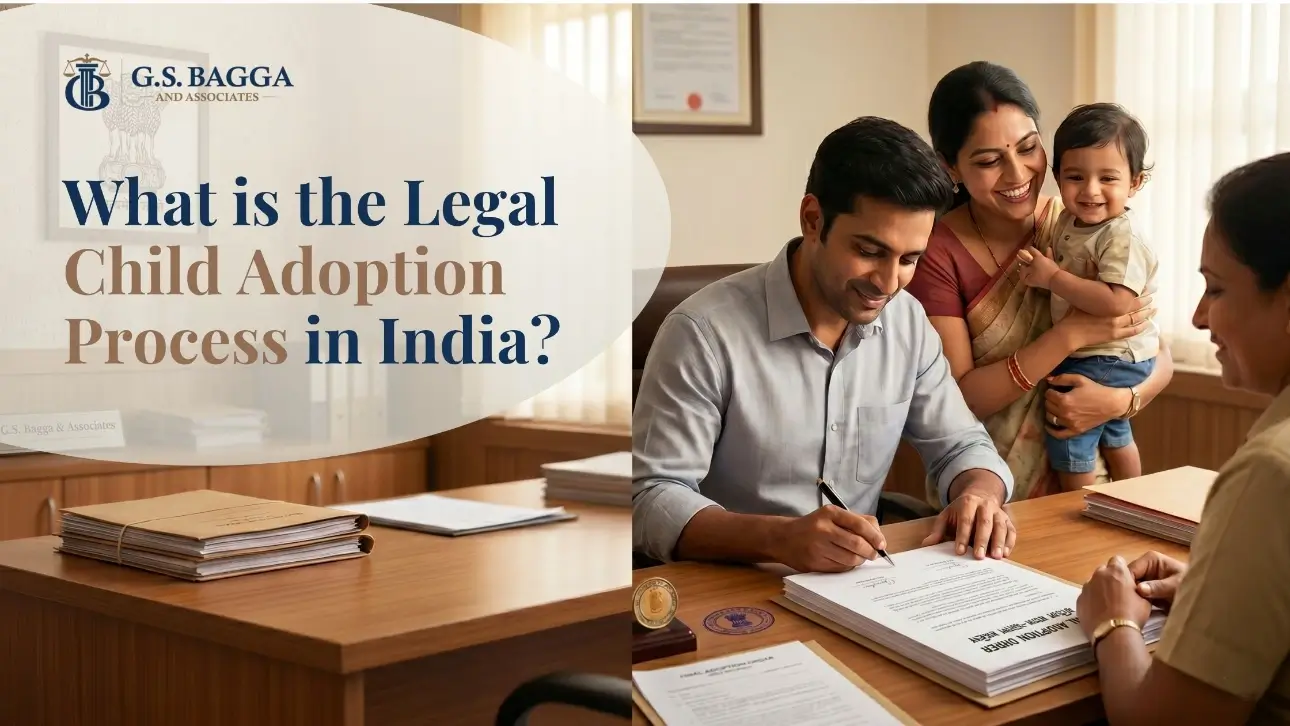
Adopting a child is one of the most beautiful and deeply meaningful ways to build or expand a family. However, the emotional decision to welcome a new member must be met with strict legal diligence. In India, child adoption is governed by a robust and tightly structured statutory framework designed specifically to prioritize the safety, security, and welfare of children.
Bypassing these established legal channels can lead to severe criminal liabilities and permanently jeopardize your parental rights. Whether you are considering adopting an orphaned or abandoned child through central institutional channels or exploring direct independent family adoptions under personal laws, being fully prepared is vital.
In this comprehensive guide, we discuss the legal frameworks, updated eligibility rules, required paperwork, and timelines involved in the official child adoption process in India.
How to Legally Adopt a Child in India?
The legal framework governing the legal adoption process in India is designed to protect both the child and the adoptive parents from exploitation. Institutional adoption is strictly regulated by the Juvenile Justice (Care and Protection of Children) Act and streamlined under the updated Adoption Regulations.
The statutory body monitoring this nationwide framework is the Central Adoption Resource Authority (CARA), an autonomous wing of the Ministry of Women and Child Development. Whether prospective parents log on to research official cara child adoption protocols, all legal institutional pathways run through a single, centralized online portal known as CARINGS.
Eligibility Criteria for Adoption in India
To secure a stable and nurturing environment for a child, the central authority maintains detailed guidelines regarding eligibility. Prospective adoptive parents (PAPs) must meet the following structural and personal benchmarks:
- Stable Financial Condition: Demonstrated capability to comfortably provide for the child’s upbringing, healthcare, and education.
- Health Assessment: Physically and mentally fit, free from any life-threatening, contagious, or highly chronic medical conditions.
- Marital Stability: A minimum of 2 years of a stable marriage if applying as a married couple.
- Mutual Agreement: Explicit legal consent of both spouses is mandatory for married couples.
- The Age Gap Rule: A minimum 25-year age gap must exist between the child and either of the adoptive parents.
- Age Bracket Alignment: Complete compliance with CARA age criteria tiers based on the child’s age group at registration.

Specific Gender & Family Composition Restrictions:
- Single Parents: A single female can legally choose to adopt a girl child or a boy child. However, a single male applicant is strictly prohibited under current regulations from choosing to adopt a girl child; he is only eligible to adopt a boy child.
- Existing Children: Rules regarding family composition are periodically revised to manage child welfare priorities. Under current CARA guidelines, couples who already have two or more surviving children are generally restricted from adopting normal, healthy children. This policy firewall helps distribute adoption placements to childless families, though exceptions remain for adopting children with special needs, step-children, or biological relatives.
Maximum Age Tiers for Parents
The individual or composite age of the parents at the exact time of registration dictates the age group of the child they are eligible to bring home:
| Age of the Child | Maximum Age (Single Parent) | Maximum Composite Age (Married Couple) |
| Up to 2 years | 40 years | 85 years |
| 2 to 4 years | 45 years | 90 years |
| 4 to 8 years | 50 years | 100 years |
| 8 to 18 years | 55 years | 110 years |
Documents Required for Child Adoption
Gathering the correct paperwork is an essential first step when learning how to adopt a child. The centralized portal enforces strict digital verification. Make sure you have the following scanned items prepared:
- Identity & Address Proof: Aadhaar Card, PAN Card, Passport, or Voter ID. (Note: A residential rent agreement is no longer accepted as valid standalone permanent address proof).
- Financial Capability Records: Income Tax Returns (ITR) for the preceding year, alongside recent salary slips or a Chartered Accountant (CA) certified income statement for business owners.
- Medical Fitness Certificate: A detailed assessment signed by a registered MBBS doctor confirming physical and mental readiness to care for a child.
- Marital Status Verification: Marriage certificate, or a certified legal divorce decree/spouse’s death certificate for single applicants.
- Family Consent Letters: Written consent statements from existing older or biological children within the family home.
Important Registration Advisory: Applicants should upload all required documents promptly after registration to avoid delays or cancellation of their application. Under current system workflows, failing to upload the documents within the expected initial window can cause the system to automatically delete the application, losing your position in the centralized seniority queue.
Common Mistakes That Delay Adoption Applications
Even a minor administrative error can reset your seniority queue or trigger an automatic system rejection. To keep your child adoption process moving forward smoothly, avoid these common procedural pitfalls:
- Uploading Incomplete Financial Records: Submitting single-page bank statements instead of the mandatory comprehensive, certified Income Tax Returns (ITR) or proper Chartered Accountant salary certifications.
- Mismatch in Address Proof: Discrepancies between the physical address listed on your Aadhaar card or Passport and the actual residential address verified during your physical home inspection.
- Delayed Medical Certificates: Uploading physical fitness forms signed by general practitioners after their validity period has lapsed, or missing specialized test results required by CARA.
- Unrealistic Age/Gender Preferences: Selecting an extremely narrow demographic filter (e.g., choosing only to adopt a girl child under 1 year of age), which drastically lengthens the centralized matching wait times.
- Failure to Respond to Referrals Timely: Missing the strict 48-to-96-hour automated digital window to reserve or reject a child profile shared on your CARINGS dashboard.
CARA vs HAMA Adoption: What’s the Difference?
Prospective parents must recognize the clear operational division between the two primary pathways in India:
- The CARA Route (Secular & Institutional): Governed by the Juvenile Justice framework, this is a completely secular pathway open to all Indian citizens regardless of their religion (Hindus, Muslims, Christians, Parsis, etc.). This is the only legal option available if you are adopting an orphaned, abandoned, or surrendered child from a registered institutional home or child care agency.
- The HAMA Route (Personal Law & Direct): Operating under the Hindu Adoptions and Maintenance Act, 1956, this route applies exclusively to Hindus, Buddhists, Jains, and Sikhs. It handles direct, family-to-family adoptions (such as adopting a relative’s child or a child directly from their biological parents). It involves a traditional “giving and taking” ceremony followed by an adoption deed registered with a Sub-Registrar.
CARA Adoption Process Explained
The institutional child adoption process has been heavily modernized to drastically reduce the administrative backlogs that families used to face.
Quick Overview of Child Adoption Process in India
Before entering the details, here is a quick overview of how the workflow moves:
- Register on CARINGS
- Upload documents promptly
- Home Study Report evaluation
- Child referral and matching
- Pre-adoption foster care placement
- District Magistrate adoption order issuance
- Birth certificate generation
- Post-adoption follow-up tracking
Step-by-Step Breakdown:
- Step 1: Online Registration: PAPs complete their profile online via the official CARINGS portal, detailing their geographical preferences and the age group of the child they wish to bring home.
- Step 2: Home Study Report (HSR): A social worker from a Specialized Adoption Agency (SAA) or District Child Protection Unit (DCPU) visits your home to assess your living conditions and lifestyle. This HSR must be completed within 60 days of your submission and remains valid for 3 years.
- Step 3: Child Matching and Referral: Based on your placement in the centralized seniority queue, child profiles—including health data and a Medical Examination Report—are shared through the portal. Parents get a window of 48 to 96 hours to officially reserve a profile.
- Step 4: Pre-Adoption Foster Care: Once a match is confirmed, the prospective parents sign the Child Study Report and can take the child home under a temporary foster care agreement while final legalities are finalized.
- Step 5: Direct Order by the District Magistrate (DM): For adoptions governed under the Juvenile Justice Act and Adoption Regulations, adoption orders are now issued by the District Magistrate or Additional District Magistrate, replacing the earlier court-based process to accelerate placement. The DM is legally required to hold in-camera sessions and clear the final order within 2 months.
- Step 6: Birth Certificate & Post-Adoption Follow-ups: Following the DM order, the agency assists you in obtaining a fresh municipal birth certificate naming you as the official parents. The SAA will then conduct mandatory post-adoption follow-up visits every 6 months for 2 years.
How Much Does It Cost to Adopt a Child in India?
The official cost of child adoption in india is strictly regulated by central statutory guidelines to ensure transparent processing and prevent any commercial exploitation or trafficking.
The standard fees are structured transparently as follows:
- ₹6,000: Processing fee for conducting the mandatory Home Study Report (HSR).
- ₹50,000: Child care corpus fee paid to the Specialized Adoption Agency (SAA) to contribute to the medical upkeep, clothing, and maintenance of children under institutional care.
- ₹2,000 per visit: Charged for the 4 mandatory post-adoption follow-up visits conducted over a 2-year period (Totaling ₹8,000).
Note: No adoption agency, social worker, or legal representative is permitted to demand cash payments or additional “donations” outside of these government-notified fees.
How Long Does Adoption Actually Take?
When planning how to adopt a child, understanding the real-world operational timeline is crucial for managing expectations. While the matching queue depends heavily on the pool of legally free children and your selected preferences, the statutory processing stages follow highly structured administrative windows.
The realistic legal timeline for the child adoption process in india is structured as follows:
| Stage of Process | Approximate Timeline | Legal/Procedural Expectation |
| Registration & Document Upload | 1 – 7 Days | Completed entirely online by the prospective parents via the CARINGS portal. |
| Home Study Report (HSR) | Up to 60 Days | Conducted by a certified social worker from an SAA or DCPU to verify domestic stability. |
| Referral & Matching Queue | Varies (12 – 24+ Months) | Dependant on pool availability, child’s age category, and parental seniority. |
| District Magistrate (DM) Order | Up to 60 Days | The statutory time mandate given to the DM to issue the final legal adoption order. |
| Birth Certificate Generation | A Few Weeks | Issued by the local municipal body naming the adoptive applicants as official parents. |
| Post-Adoption Tracking | 2 Years | Mandatory follow-up tracking visits conducted every 6 months post-placement. |
Conclusion
Adopting a child in India is a profound milestone, but navigating the strict legal frameworks of CARA or HAMA requires careful execution to safeguard your family’s future. Following the modern, District Magistrate-led process ensures a transparent, secure transition into parenthood.
If you need dedicated legal guidance regarding CARA registrations, HAMA adoptions, documentation compliance, or navigating District Magistrate proceedings smoothly, the experienced team at G.S. Bagga & Associates is here to assist you. Our family law experts ensure your entire adoption journey is handled with the utmost confidentiality, speed, and legal precision, letting you step into this beautiful new chapter with absolute peace of mind.