

In the Indian Society, marriage is considered as a breakthrough in one’s life and a new life begins for both the man and the woman in the form of the marital life. Adjustment into such a big transition can be tough. Both are required to adjust as per the needs of the other.
Before getting married, it might feel that a particular person is the right partner for you but as you start to live together with that person, you realize that this partnership is not made for you. At this point, the entire world of that person comes shattering down. This is so because, they realize that their happiness is not with the person that they wed. They cannot seek separation as well because of the societal pressure. Such is the situation of the Indian Society.
The recent trend shows, a lot of couples opting for divorce or separation from their spouses, be it after 20 years of marriage or just 3 months of marriage. The society which earlier used to ridicule the people who took such a step, is now too slowly accepting back divorcees into the society. This has, in turn-initiated courage into those, who have been suffering or adjusting only for the sake of happiness of the family to stand up and search for their own happiness.
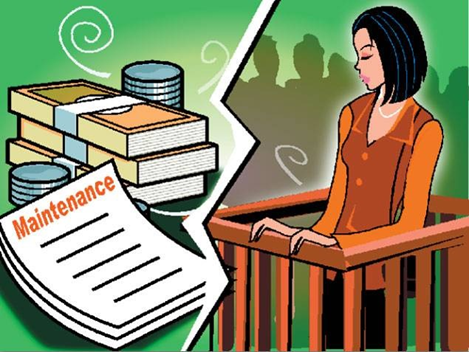
Can I claim maintenance after getting mutual divorce from my partner?
A couple, when opts for the mutual divorce, they set the terms and conditions for the divorce themselves as per their own choice, voluntarily with the help of their lawyers. Such an agreement is made legal and binding, when it is presented in front of a magistrate in the form of a mutual divorce petition. The magistrate then gives its assent to the petition, upon realization of no sign of reconciliation between the spouses, thus making the divorce legal.
The magistrate does not interfere with the terms and conditions of the mutual divorce agreement as they have been voluntarily agreed upon by both the parties.
In a lot of situations, in order to get out of the marriage, a lot of women either waive of their right to claim maintenance or they take a very less or minimal amount in the form of maintenance. This type of agreement or monitory settlement is insufficient for the woman to survive in the society. As per the Indian law, it is the right and duty of the husband to maintain his wife children and old parents, who are not capable to maintain themselves. The meaning of word wife has been given extended meaning by the law to provide security to those who are not able to maintain themselves.
How can such a maintenance can be claimed?
Many courts have, through their judgements held that if a man and a woman after being mutually divorced are living separately, then it does not mean that they are living separately by mutual consent; and thus, a wife who obtains divorce by mutual consent cannot be denied maintenance by virtue of section 125 of criminal code.
It has been further explained that if the divorced wife under any circumstances, is unable to maintain herself, and has not remarried either then she shall be entitled to claim maintenance from her divorced husband.
What are the important aspects to take care of while filing such an application?
The court through various judgements have retaliated that a former husband who has divorced his wife cannot be discharged from his legal duty and obligation to provide minimum amount of maintenance to his former wife. Under section 125 of the criminal code, the judicial officers must provide an amount in the form of maintenance which is capable to maintain the wife. The wife can apply for maintenance by filing an application under section 125 of the criminal code.
- Consult an advocate- The application must be filed by a practicing advocate on behalf of the divorced wife. If you are seeking maintenance, then you must first consult an advocate, discuss your matter with them, explain to them your basic financial needs, the terms and conditions of your mutually agreed divorce, etc.
- Such an application must have two things-
- First- The most important thing is to prove that the applicant was legally married to the respondent. This can be showed by attaching the marriage certificate, wedding card, family photos, etc.
- Second- It must include evidence, affidavits and the fact that the respondent has neglected to maintain his former wife, who is unable to maintain herself and is fully dependent on the respondent, having no or insufficient source of income to maintain a basic, steady lifestyle.
- Third- The application for maintenance must provide the fact that the husband has sufficient means to provide maintenance to his former wife. To prove such a statement, it must be supported by relevant documents showing source of income of the husband, by gathering a list of all the assets owned by the husband.

How can GS Bagga & Associates help you?
Greetings! When people marry, they do so with a hope of spending a lifetime together, sharing joys and sorrows together. Sometimes, marriages do not work out as while living together, they realize that they both are not able to cohabit together as a couple and it would be bets to part their ways. While separating form your partner, it is imperative to think about your future in financial terms. The offices of G.S. Bagga & Associates have been experienced in family law and matrimonial issues for over 7 years now. If you’ve found the above information satisfying, you can get in touch with us and can book a free consultation. We would love to support you with our legal expertise in the matter. Feel free to contact us, anytime.