

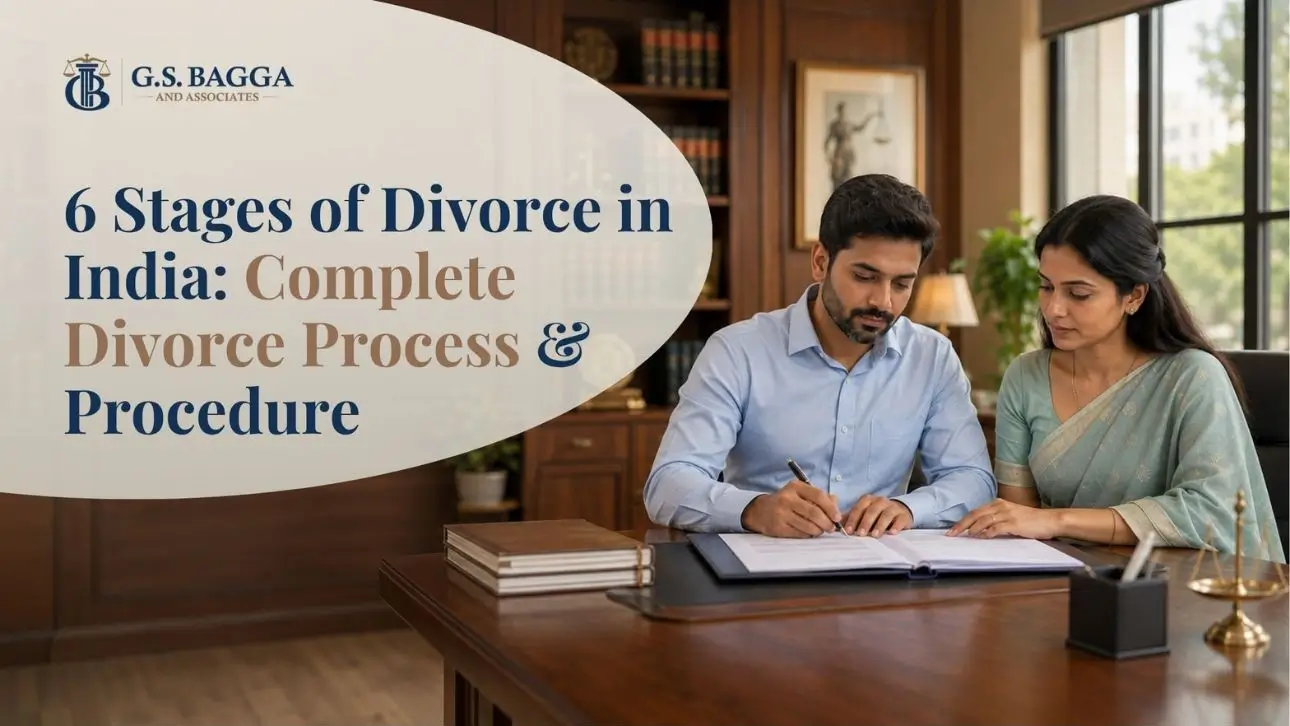
Getting a divorce in India is not just about filing a petition and waiting for a court order. There are several steps involved, and the process can change depending on the type of marriage, the law that applies to it, and whether both spouses agree to the divorce. Different laws provide different procedures for matrimonial matters in India.
For some couples, the divorce may be by mutual consent and the process can be relatively straightforward. In other cases, the divorce may be contested, with both sides presenting their claims and evidence before the court.
In this article, we discuss the divorce process in India, including the main stages of divorce proceedings, mutual and contested divorce, documents required, expected timelines, maintenance, child custody, property matters and other important aspects you should know before starting a divorce case.
Different Types of Divorce Process in India
Divorce cases generally follow two main routes, mutual consent or contested proceedings. The choice depends mainly upon whether both spouses agree about separation. Your circumstances also determine which legal route may be suitable.
Divorce by Mutual Consent
A mutual consent divorce begins when both spouses agree about separation. They jointly approach the court and request dissolution of their marriage. Generally, spouses must have lived separately for one year. They must also agree that continuing their marriage is no longer possible.
Important issues should be discussed before approaching the court. These can include maintenance, children, property, and financial responsibilities. The court records the spouses’ statements during required proceedings. A six-month waiting period generally follows the first motion. Courts can waive this period in suitable circumstances.
Contested Divorce
A contested divorce begins when spouses disagree about ending their marriage. One spouse files the case while the other spouse contests it. The petitioner must establish a legally recognised ground for divorce. Cruelty, desertion, and conversion are examples of recognised grounds.
Evidence becomes important when allegations are disputed between spouses. The court hears both sides before making its final decision. Contested divorce cases usually involve more hearings than mutual consent matters.
Stages of Divorce Proceedings in India
The stages of divorce proceedings can vary between different cases. Still, most contested cases follow a broadly similar legal journey. Understanding these divorce case stages helps spouses prepare practically and emotionally.
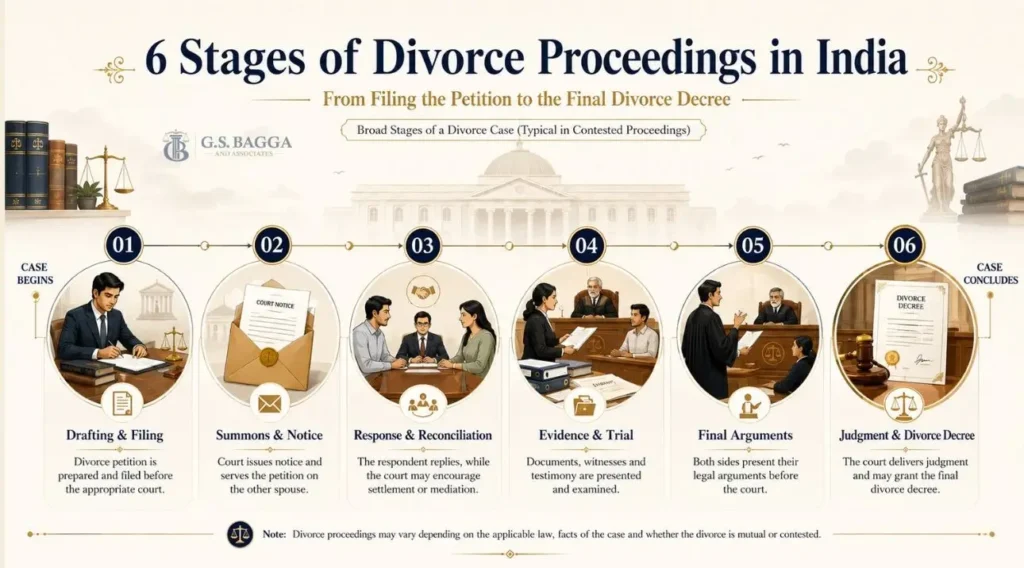
Stage 1: Drafting and Filing the Divorce Petition
The procedure for divorce india usually starts with proper legal preparation. Your lawyer listens carefully to your side of marriage. They discuss events that eventually led towards seeking divorce. The lawyer checks possible grounds, documents, and court jurisdiction.
The petition explains the marriage, disputes, allegations, and reliefs requested. Relevant documents are collected and submitted with the petition. The petition is then presented before the appropriate Family Court. The correct court depends upon circumstances recognised under matrimonial law.
Stage 2: Issue and Service of Summons
After filing, the court issues notice to the other spouse. This notice informs them about the divorce case filed against them. It also gives them an opportunity to appear before court. The summons must generally follow the prescribed legal process.
Sometimes service takes longer because addresses create practical difficulties. If the respondent avoids receiving notice, further directions may follow. Ignoring summons can create serious problems during later proceedings. Legal advice should therefore be taken without unnecessary delay.
Stage 3: Respondent’s Appearance, Response and Reconciliation
After receiving notice, the respondent gets an opportunity to answer. They may appear personally or through their lawyer as permitted. A written response usually addresses allegations made within the petition.
The respondent can admit, deny, or explain those allegations. Family Courts may encourage reconciliation or settlement where circumstances permit. Counselling or mediation may sometimes help spouses resolve disagreements. The purpose is not forcing every couple to continue marriage.
It provides an opportunity to explore possible settlements. If reconciliation does not work, the case normally moves forward. The court then proceeds towards examining evidence from both sides.
Stage 4: Evidence and Trial
Evidence is often the most demanding part of contested divorce proceedings. This is where allegations need support through legally acceptable evidence. The petitioner normally presents documents, witnesses, and personal testimony. The respondent’s lawyer can question those witnesses during cross-examination.
The respondent then gets an opportunity to present their defence. They may produce documents, witnesses, and other relevant evidence. The petitioner’s lawyer can question those witnesses during cross-examination. Spouses may also seek temporary relief during this stage.
One spouse may request interim maintenance during ongoing proceedings. Parents may seek temporary custody or visitation arrangements for children. Family Court proceedings involving marriage are generally heard privately.
Stage 5: Final Arguments
Once evidence is completed, both lawyers present their final arguments. Each side connects the evidence with their legal position. Lawyers may discuss documents, witness statements, and relevant decisions. They explain why the judge should accept their client’s case.
The opposing lawyer explains why those claims should not succeed. The judge considers both arguments along with the complete case record. Strong arguments usually depend upon evidence already placed before court.
Stage 6: Judgment and Divorce Decree
After hearing everyone, the judge considers the complete case record. The court then delivers judgment based upon law and evidence. If the grounds are established, the court may grant divorce. A formal divorce decree then legally dissolves the marriage.
The court may also decide connected issues when properly raised. These issues can include maintenance, custody, or other requested reliefs. A party may have appellate remedies against the judgment when available.

Documents Needed to File for Divorce in India
Before filing a divorce case, it is better to keep the important papers ready. Documents can be different from one case to another, depending on the type of divorce and case complexity.. Common documents may include:
- Marriage certificate or other proof of marriage
- Aadhaar Card, PAN Card, Passport or other identity proof
- Address proof of both spouses
- Recent passport-size photographs
- Wedding photographs or marriage invitation card, if required
- Documents showing the date and place of marriage
- Salary slips, Form 16, Income Tax Returns or other income proof
- Bank statements and details of loans or financial liabilities
- Property papers and other asset-related documents, where relevant
- Children’s birth certificates, school records or medical documents, if applicable
- Previous court orders or details of other ongoing cases, if any
- Messages, emails, photographs, medical records, police complaints or other evidence relevant to the case
- Settlement terms or other agreed documents in a mutual consent divorce, where applicable
Keep the relevant documents ready before filing. Your lawyer can check the papers and help you prepare the documents required for your particular case.
Step-by-Step Mutual Consent Divorce Process
The process to divorce in india can be simpler through mutual consent. However, simpler does not mean every issue becomes automatically easy. The broad process follows this sequence:
Joint Petition → First Motion → Waiting Period → Second Motion → Decree.
Both spouses first prepare and file their joint divorce petition. For marriages governed by the Hindu Marriage Act, 1955, Section 13B provides for divorce by mutual consent, subject to the conditions and procedure prescribed under the Act.
They then appear before court for the first motion hearing. The court records their statements and confirms their consent. Both spouses should understand every financial and parenting term beforehand.
The waiting period generally follows the first motion hearing. Courts can waive this period in suitable circumstances. At the second motion, both spouses confirm their continuing consent. If requirements are satisfied, the court grants the divorce decree.
How Long Does the Divorce Process Take in India?
There is no fixed time for a divorce in India. A mutual consent divorce may take around 6 to 18 months, while a contested divorce can take 2 to 5 years or even longer in complicated cases.
Mutual divorce can be quicker when both spouses agree on the divorce, maintenance, custody and other terms. In suitable cases, the six-month waiting period may also be waived by the court.
Contested cases usually take more time because of evidence, cross-examination, hearings and other disputes. Court workload, adjournments, settlement discussions and appeals can also add to the timeline.
Maintenance, Child Custody and Property Matters During Divorce
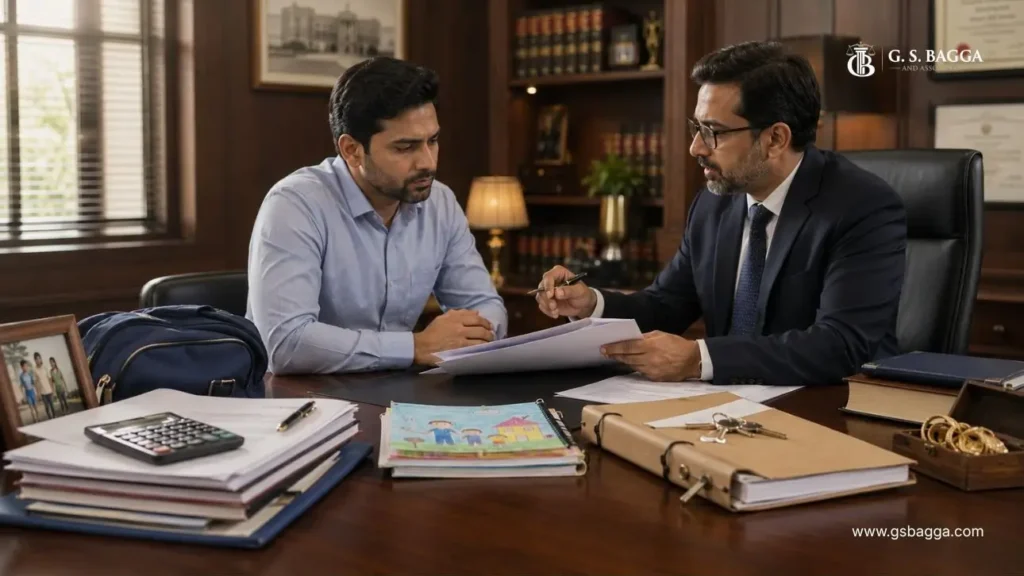
Divorce rarely involves only the question of ending marriage. Money, children, belongings, and future responsibilities also matter. These issues may require separate applications during proceedings.
Maintenance and Alimony
A spouse without sufficient independent income may seek financial support. The court considers financial circumstances before deciding appropriate interim relief. Permanent maintenance may also be considered at the appropriate stage. Income, assets, and financial needs can influence such decisions.
Child Custody
Children often become the most sensitive part of divorce proceedings. Parents may disagree about where children should live after separation. The child’s welfare remains central when courts consider custody arrangements.
Education, healthcare, safety, and emotional needs may also matter. Custody can involve visitation and regular access for another parent. Parents should avoid making children carry their marital conflict.
Property and Stridhan
Divorce does not automatically divide every marital asset equally. Property rights depend upon ownership, documents, contributions, and applicable law. Stridhan should not be casually treated as joint property. A woman’s rights over her Stridhan can continue after marriage ends.
How G.S. Bagga & Associates Can Help With Your Divorce Case
At G.S. Bagga & Associates, we understand that no two divorce cases are exactly the same. Some couples agree to separate, while others have disputes over divorce, maintenance, children or property.
Our team assists with both mutual consent and contested divorce, from preparing the petition and documents to negotiations and court representation. We also handle related matters such as maintenance, alimony, child custody, visitation and interim reliefs.
If your matter goes to court, we guide you through each stage and work to protect your legal interests
Frequently Asked Questions About the Divorce Process in India
When can a spouse apply for interim maintenance?
A spouse can apply for interim maintenance during the divorce proceedings, depending on the law applicable to the marriage. For example, Section 24 of the Hindu Marriage Act allows eligible spouses to seek financial support and litigation expenses during the case.
What happens if a spouse ignores the court notice?
If the spouse does not appear after proper service of summons, the court may proceed ex parte. But the case does not automatically end there. The petitioner still needs to present evidence, and the court will decide the matter based on the law and evidence.
When does mediation take place in a divorce case?
Mediation or reconciliation may take place during the proceedings, depending on the case and court directions. The aim is to see whether the dispute can be resolved without continuing a full contested case. It does not mean that the court will force the couple to stay together.
Can new documents be submitted after the evidence stage?
Sometimes, yes. A court may allow additional documents or evidence in appropriate circumstances. However, it is better to submit important documents at the proper stage itself. If something is produced late, the court may ask why it was not filed earlier.
Does mutual consent divorce follow the same six stages?
No. Mutual consent divorce follows a different process because both spouses are asking for the marriage to be dissolved. It generally involves a joint petition, first motion, waiting period where applicable, second motion and, if the requirements are met, the divorce decree.
Final Thaughts
The family court procedure for divorce can feel intimidating when everything seems unfamiliar. Knowing the stages of divorce proceedings in india can reduce that uncertainty. Mutual and contested divorces follow different paths and involve different challenges.
Children, finances, property, and maintenance can make matters more complicated. There is also an emotional cost that should never be ignored. Try to protect your peace while protecting your legal interests.
Good preparation can make the process of divorce in India more manageable. The right legal advice can also help you avoid costly mistakes. If you are considering divorce, understand your options before taking action.