

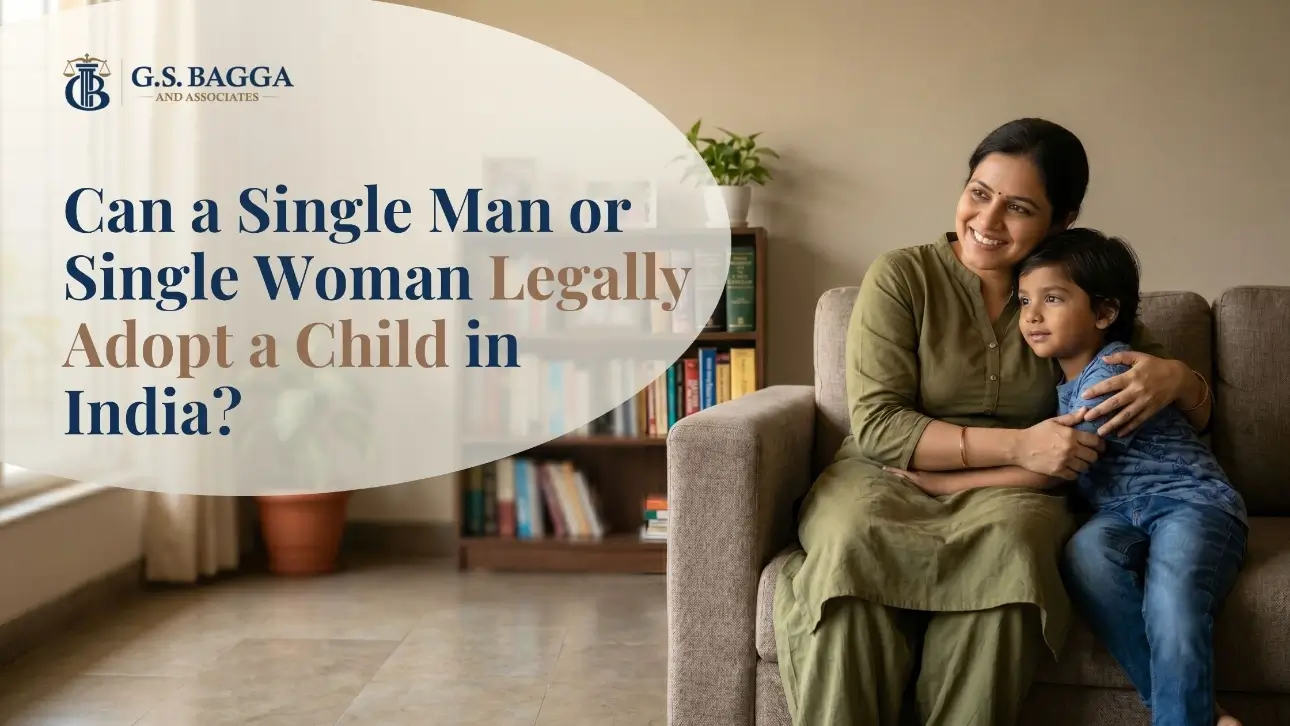
Indian society is undergoing a significant cultural and legal shift. Across the country, individuals are increasingly choosing to build families on their own terms, whether driven by personal fulfillment, financial independence, or a genuine desire to give a child a stable and loving home. Single parent adoption in India has seen a steady rise as a result, and the law firmly supports this choice.
If you are unmarried, divorced, or widowed, you may be asking: can a single woman adopt a child, or can a single man adopt a child under current Indian law? The answer for both is yes, with certain gender-based distinctions. The process is governed by strict eligibility criteria and child safety checks, all designed to serve the best interests of the child.
In this legal guide, we cover everything a solo prospective parent needs to know before beginning the adoption process in India.
Legal Framework Governing Single Parent Adoption in India
Adoption in India is regulated under the Juvenile Justice (Care and Protection of Children) Act, 2015, as amended in 2021, and the Adoption Regulations, 2022 issued by the Central Adoption Resource Authority (CARA). These laws apply to all religions and communities, unless a person chooses to adopt under the Hindu Adoption and Maintenance Act (HAMA), 1956, which is applicable exclusively to Hindus, Buddhists, Jains, and Sikhs.
For most prospective parents, including single individuals, the CARA route under the JJ Act is the primary legal pathway. Your marital status alone does not disqualify you from adopting, but specific adoption rules apply based on your gender.
Gender-Based Eligibility Rules for Single Adoptive Parents in India
Can a Single Woman Adopt a Child in India?
If you are an unmarried, divorced, or widowed woman wondering can I adopt a child as a single woman, the legal answer is an unqualified yes. Under CARA guidelines, a single woman can adopt a child of any gender, making her fully eligible to bring home either a boy or a girl.
Whether you are asking can a single woman adopt a child in India after a divorce or as a first-time parent, or whether can a divorced woman adopt a child in India applies to your situation, both follow the exact same legal pathway. Marital history creates no distinction under the JJ Act or the Adoption Regulations, 2022.
Can a Single Man Adopt a Child in India?
If you are a single or unmarried man asking can I adopt a child as a single man, you are legally eligible, but with one important restriction. Under Section 57(4) of the Juvenile Justice Act, 2015, a single man can adopt a male child only and is not permitted to adopt a female child under any circumstances.
This gender-safeguarding restriction is strictly enforced by CARA across all Specialised Adoption Agencies to protect the welfare of girl children.
CARA Age Limits and the 25-Year Gap Rule Explained
CARA enforces specific age requirements for all prospective adoptive parents. For single parents, three key rules apply:
- The minimum age of a single prospective adoptive parent must be at least 25 years.
- The minimum age difference between the parent and the child must be at least 25 years.
- The absolute maximum age for a single individual to register for adoption is 55 years.
The maximum permissible age depends on the age of the child being adopted:
| Age of the Child | Maximum Age of Single Prospective Adoptive Parent |
| Up to 2 years | 40 years |
| Above 2 and up to 4 years | 45 years |
| Above 4 and up to 8 years | 50 years |
| Above 8 and up to 18 years | 55 years |
A child who has attained 18 years of age is no longer eligible for adoption. Notably, these age criteria do not apply in cases of relative adoptions or step-parent adoptions, where an established relationship between the parent and child already exists.
Step-by-Step Adoption Procedure for a Single Parent
The entire adoption process in India is centralized on the official CARINGS portal to ensure transparency and eliminate unauthorized placements. The procedure follows five structured stages:
- Online Registration — Register on the CARINGS portal and upload required documents including identity proof, PAN card, income tax returns for the past two years, and a medical fitness certificate.
- Home Study Report (HSR) — A social worker from a recognized Specialised Adoption Agency visits your home to assess your physical environment, financial stability, emotional readiness, and support network. Single parents are typically required to have a designated close family member sign an undertaking to care for the child in an emergency.
- Child Matching — Once your HSR is approved, your profile enters a nationwide seniority-based waiting list. CARA’s system generates referrals of legally free children who match your stated criteria.
- Pre-Adoption Foster Care — After accepting a referral, you may bring the child home under a temporary foster care arrangement while the legal documentation is finalized.
- Final Adoption Order — The Specialised Adoption Agency files a petition before the District Magistrate of the relevant jurisdiction. Upon verification, the District Magistrate issues the final adoption order, conferring full legal parenthood and making the child your lawful heir.
How Long Does Single Parent Adoption in India Take?
The timeline for completing a single parent adoption in India varies based on several factors:
- Infant demand: The waiting period for healthy children under 2 years of age is considerably longer due to high demand. Prospective parents registering for this age group should anticipate a multi-year wait.
- Older children and special needs: Choosing to adopt an older child, a sibling group, or a child with special medical needs from CARA’s immediate placement list can significantly reduce your waiting time.
- Seniority algorithm: CARA assigns referrals strictly by seniority and preference matching. Overall, the process typically takes 1 to 3 years from registration to the final adoption order.
Getting Right Legal Help for Your Adoption Journey
Adopting a child in India is a profound milestone, but it also requires careful compliance with CARA or HAMA rules to protect your family’s future. Following the District Magistrate-led process ensures a transparent and legally secure path to parenthood. Whether you are pursuing CARA registration, documentation compliance, or adoption-related approvals, every step must be handled with precision to avoid delays and safeguard the child’s best interests.
If you need dedicated legal guidance, the team at G.S. Bagga & Associates can assist with CARA registrations, HAMA adoptions, paperwork, and District Magistrate proceedings. Our family law experts manage the process with confidentiality, speed, and legal accuracy, helping you begin this new chapter with complete peace of mind.