


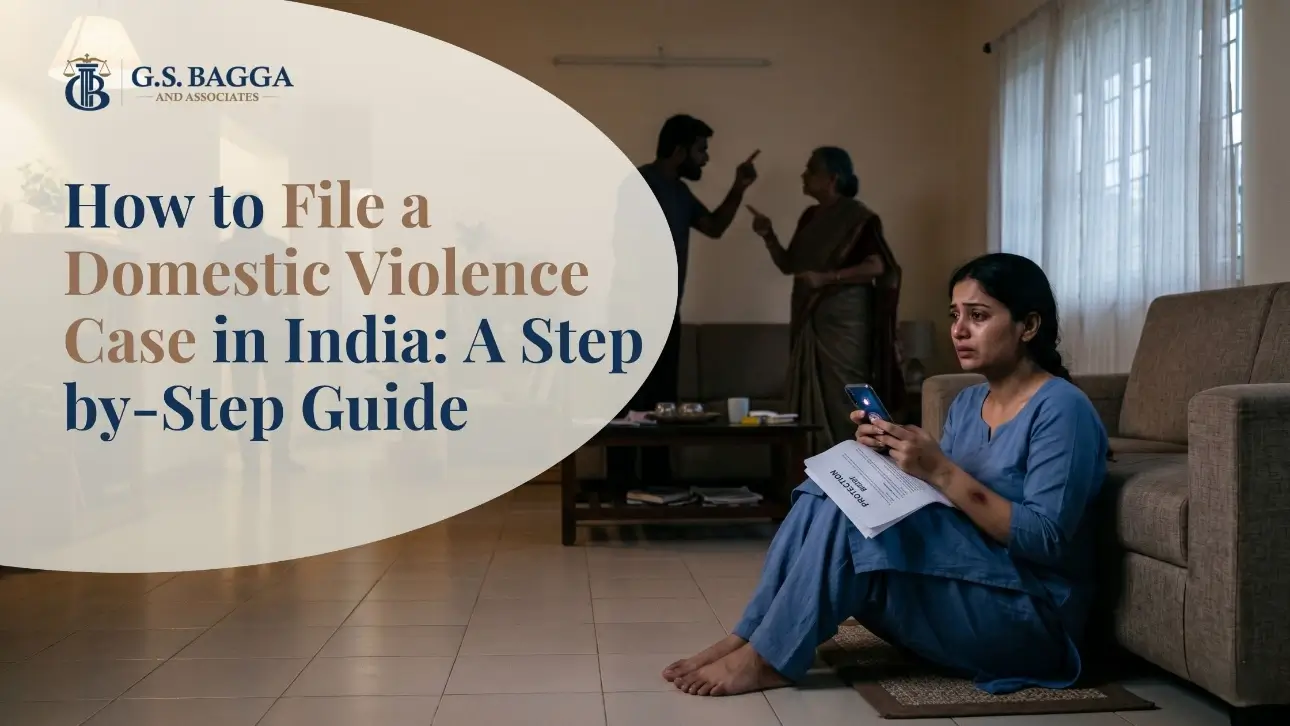
Domestic violence is a real problem faced by many Indian women daily. It not only includes physical violence; it can also be verbal, psychological, sexual, and economic. According to the data from NFHS, about 31% of Indian married women face domestic violence.
It can happen to anyone, irrespective of age, religion, sex, or other aspects. It can occur among various relations, such as married couples, live-in partners, or even in a dating relationship. However, Indian law only protects women facing domestic abuse. Victims can seek civil protection or file domestic violence criminal charges against abusers.
Knowing how to file domestic violence case is critical in ensuring that you stay safe. Getting assistance from any protection officer, NGO, or lawyer could help you safeguard your rights. In this blog, we will explain domestic violence in detail and guide you how to file a case in India in 2026.
What is Domestic Violence?
When your husband prevents you from meeting your friends, when he hits you during a verbal fight, or when your mother-in-law mocks you in public, that is domestic violence. There is a wrong to think domestic violence is purely physical violence. So, what is domestic violence case? It includes a range of abuse:
- Beating, kicking, slapping, or other bodily harms
- Constant insults, gaslighting, threats, or isolation
- Any sexual activity without the consent of the victim or by force
- Withholding economic support, job opportunities, food, or healthcare
If you are threatened, trapped, or undervalued within your own home, then it is domestic violence. According to Indian laws, an action or conduct that causes harm or injury, affects the physical or mental well-being of a woman, and can be termed domestic violence.
Important Laws Related to Domestic Violence in India
India protects victims of domestic abuse through a combination of civil protection and criminal provisions.
1. The Protection of Women from Domestic Violence Act, 2005
This civil law provides immediate legal relief to women facing abuse within a shared household. This law covers everything related to domestic violence from the start to the end. In Section 12 of the Act, the victims can obtain one or more of the remedies under the Act, such as a protection order, a residence order, custody of children, compensation, and maintenance amount from the court.
2. Bharatiya Nyaya Sanhita, 2023 (formerly, IPC)
Two major sections in Indian criminal law pertain to the domestic abuse situation. The BNS section 85 (Section 498A IPC previously) penalises the cruelty meted out by the husband or his relatives with physical/mental cruelty and imprisonment for up to 3 years. The BNS section 80, along with the Dowry Prohibition Act, penalises harassment for dowry and the unnatural death of the wife within seven years of marriage.
Who Can File a Domestic Violence Case in India?
Before learning how to file domestic violence case, understand who can file such a case. In India, only women who are in domestic relations can file a domestic violence case.
1. Woman in Domestic Relations
The woman who lives or had been living in a common house with the accused.
The households must be related through-
- Marriage: Wives abused by husbands or in-laws.
- Live-in Relationships: Live-in partners get the same protection as wives.
- Blood Relation: Daughters, mothers, and sisters.
- Adoption: Adopted relations get the same considerations as blood relations.
2. Legal Representatives
These representatives can file on behalf of the victim when they are unable to approach the court in person:
- Protection Officer: An officer appointed by the government, whose responsibility is to assist the victim in filling out the Domestic Incident Report (DIR) and taking her to the court.
- Service Provider: Any member of the notified NGOs or social workers who may be able to assist in filling out the DIR and offer medical or legal aid.
- Any Other Person: Anyone else who knows about the abuse, like a friend, relative, or neighbour.
Can Men File a Domestic Violence Case?
No. The DV Act and the cruelty criminal laws are strictly for women. However, minor boys (under 18 years) can be included in a case if their mother files it on their behalf for custody and protection orders.
Step-by-Step Process to File a Domestic Violence Case?
Filing a domestic violence case in 2026 involves clear civil and criminal pathways under the DV Act and the BNSS. These are the steps involved on how to file domestic violence case:
Step 1: Accumulate Critical Documents
Include medical certificates, photos, WhatsApp messages, voice notes, or even financial blackmail documents to create a solid prima facie case.
Step 2: Decide Your Mode of Action
- The Civil Way (Faster Relief): Consult a Protection Officer appointed by the government or a legal aid center. The Protection Officer would write the compulsory Domestic Incident Report (DIR).
- The Criminal Way (Punishment): Head to the police station and lodge an FIR under Section 85 of the BNS (matrimonial cruelty). An Electronic or Zero FIR can be lodged anywhere for domestic violence criminal charges.
Step 3: Filing an Application in Court
A lawyer or the PO will make an official application under Section 12 of the PWDVA or under Section 85 of the BNS at the Judicial Magistrate Court, along with the documentary evidence and the DIR.
Step 4: Applying for Interim Orders
At the same time, make an application under Section 23 seeking interim orders on an urgent basis within 24 to 72 hours. Normal interim orders may take days to a few weeks to be granted.
Step 5: Court Proceedings and Judgement
The Magistrate makes notice to the offender. The court then makes a final order after considering all the evidence and witness statements. The judge can provide civil relief under the DV Act or have domestic violence criminal charges against the abuser under BNS.
What Reliefs Can You Claim in Court?
Under the DV Act, 2005, Indian courts can grant several forms of relief to protect victims and ensure their safety and financial security.
These reliefs may include:
- Protection Orders: Stopping the abuser from committing further violence, threats, or harassment
- Residence Order: Prohibiting the abuser from evicting the victim from the shared home or providing an alternative residence
- Financial Reliefs: Maintenance allowance, payments for medical treatment, and compensation for abuse
- Custody Order: Arrangement for temporary custody and visitations with children
- Damages: Damages in cases of emotional and psychological trauma, and physical injuries suffered by the abused
- Other Forms of Relief: Provision for interim and emergency relief, such as protection from abuse within 2-3 days
Courts can grant one relief, or several reliefs can be issued in relation to the situation at hand.
Can Domestic Violence and Divorce Cases Be Filed Together?
Yes, domestic violence and divorce cases can be filed together. Both are separate legal proceedings governed by different systems.
A divorce case involves seeking dissolution of marriage under personal laws, such as the Hindu Marriage Act, in a Family Court. A domestic violence case involves approaching a Judicial Magistrate under the PWDV Act for immediate protection measures and daily orders.
Filing both concurrently is one of the most popular and useful methods in such situations. Any proof regarding domestic violence, such as FIRs, medical certificates, and DIR, serves as a way to establish mental or physical cruelty in the divorce proceedings, which is an essential criterion for filing for divorce. Furthermore, both forms of action can be sought at the same time, but there shall be an adjustment made to ensure that double recovery does not occur.
Key Factors to Remember in Domestic Violence Cases
Handling domestic violence requires proper handling to guarantee safety and justice.
1. Emergency Contacts (24/7 Toll-Free)
- Police Emergency Hotline Number: 112
- Women Helpline: 1091 or 181
- Women Helpline NCW WhatsApp: +91-7217735372
2. Digital & Physical Safety Measures
- Keep Your Devices Safe: Use fingerprint and facial recognition on your devices and keep evidence safe in cloud storage (message, audio).
- Visit Government Hospital: Immediately visit a government hospital in order to get an MLC (Medico Legal Case).
- Approach the Domestic Protection Officer to lodge a DIR (Domestic Incident Report).
- Protect Your Housing: Avoid leaving the shared household voluntarily unless unsafe, to preserve your right to a Section 19 Residence Order.
Conclusion
Domestic violence and the protection of the rights of victims have been regulated with effective laws in India. It is extremely essential that all women who experience domestic violence should be aware of their rights and security, and how to file domestic violence case and preserve all the evidence they need.
If you are a victim of domestic violence or know anyone who is, getting professional legal help is very important. G.S. Bagga & Associates offers legal services in cases of domestic violence, protection orders, maintenance issues, custody, residence rights, divorce cases, domestic violence criminal cases, and other related cases. Feel free to speak with us about your issues to get better legal guidance.

