

Family law Specialists
Divorce Lawyer in Supreme Court of India
An unfavourable High Court judgment can leave you worried about your marriage, financial security, and children’s future. You may have already spent years dealing with matrimonial litigation, only to face another difficult decision. Understanding whether further legal action is possible can help you regain clarity.
At G.S. Bagga & Associates, we provide legal assistance for Supreme Court matrimonial matters, including Special Leave Petitions (SLPs), interstate divorce transfers, and related proceedings. Our team reviews judgments, identifies available legal grounds, prepares petitions, and addresses the filing requirements necessary to pursue your case.
- 20+ Years of Combined Legal Experience
- Divorce and Family Law Assistance
- Clear Legal Guidance
Prefer WhatsApp? Use the chat option on our website for a brief enquiry.
Request a Private & Confidential Consultation
Your privacy is our priority. All discussions are strictly protected under advocate-client confidentiality.

Understand Jurisdiction
When Can You Approach the Supreme Court for a Matrimonial Matter?
A new divorce petition ordinarily begins before the competent Family Court, not directly in the Supreme Court. However, the Supreme Court may consider certain matrimonial disputes involving High Court judgments, interstate transfers, and exceptional constitutional relief. The correct legal procedure depends on your existing court orders and the circumstances.
Under Article 136, the Supreme Court may grant special leave to appeal against a High Court judgment. Section 25 CPC allows transfers of eligible civil proceedings between states. Article 142 also provides exceptional powers to grant complete justice in suitable matrimonial matters.
OUR PRACTICE AREAS
Supreme Court Divorce and Matrimonial Matters We Handle
Matrimonial disputes can continue even after a High Court judgment. Financial responsibilities, child custody arrangements, and cases pending in different states may require further legal attention. Our legal team identifies the available remedies and prepares documents according to the issues involved.

Special Leave Petitions (SLPs) Against High Court Divorce Judgments
If a High Court has dismissed your divorce appeal or passed an unfavourable judgment, an SLP under Article 136 may be available. The Supreme Court decides whether the legal grounds justify granting special leave. It does not automatically reconsider every disputed fact decided by lower courts.
Our team reviews the judgment, earlier proceedings, and material findings to identify possible grounds for challenge. We prepare the proposed petition, legal grounds, supporting affidavits, and necessary applications. The final decision on granting special leave rests with the Supreme Court.
Interstate Matrimonial Transfer Petitions (Section 25 CPC)
Attending matrimonial proceedings in another state can create difficulties involving travel, employment, finances, and childcare. Under Section 25 CPC, the Supreme Court may transfer eligible civil proceedings between states when the interests of justice require it. Both husbands and wives may request such transfers.
At G.S. Bagga & Associates, we examine the pending proceedings, proposed destination court, and reasons for transfer. Our team prepares the transfer petition, supporting affidavit, and relevant documents. The Supreme Court considers both parties’ circumstances before determining whether the transfer is justified.
Challenges to Child Custody, Maintenance and Alimony Orders
A High Court order concerning child custody or financial support may affect your family’s future and financial responsibilities. Where legally justified, the Supreme Court may consider further challenges. Whether a petition can proceed depends on the nature of the judgment and available legal grounds.
We review the existing orders, financial records, and relevant evidence before identifying the legal issues requiring consideration. Our team prepares the necessary documents and applications. In custody matters, the child’s welfare remains central, while maintenance challenges require careful examination of financial information.
Divorce for Irretrievable Breakdown of Marriage (Article 142)
Some marriages remain legally unresolved despite prolonged separation and unsuccessful reconciliation efforts. In Shilpa Sailesh v. Varun Sreenivasan (2023), the Supreme Court confirmed its exceptional power under Article 142 to dissolve an irretrievably broken marriage where necessary to achieve complete justice.
Our team can examine whether requesting Article 142 relief has a legal basis in proceedings properly before the Supreme Court. The Court considers the circumstances, financial arrangements, and children’s interests. This power is discretionary and does not create an automatic right to divorce.
What Is the Time Limit for Filing an SLP in the Supreme Court?
A civil Special Leave Petition ordinarily must be filed within 90 days from the judgment or order being challenged, subject to applicable Supreme Court Rules and limitation provisions. A different 60-day period applies in specified cases involving refusal of a certificate of fitness to appeal.
The actual filing deadline depends on the relevant judgment date, certified-copy records, and legally permitted exclusions. If the prescribed period has expired, an application for condonation of delay may be possible. We examine the relevant dates and prepare appropriate documents where legally justified.

Received a Recent High Court Judgment?
The filing period is an important part of deciding your next legal step. Our team can review the judgment date, available documents, and applicable legal procedure.
Can You Request an Interim Stay From the Supreme Court?
Filing an SLP does not automatically stop the High Court judgment or order being challenged. This becomes important when an existing decision creates immediate financial obligations or affects child custody arrangements. A request for interim protection may therefore need to be considered during petition preparation.
At G.S. Bagga & Associates, we examine the challenged order and assess whether interim relief can legally be requested. Our team prepares the relevant prayer or application with supporting documents where appropriate. The Supreme Court determines whether a stay or another direction should be granted.
Step By Step
How We Prepare Supreme Court Matrimonial Petitions
Supreme Court proceedings require more than drafting a petition. The legal grounds, supporting records, and filing requirements must be addressed carefully. We organise the legal preparation into five stages, allowing clients to understand the work involved before their matter proceeds.
Review Your Judgment and Court Records
We begin by understanding your matrimonial dispute and examining the latest judgment or pending proceedings. This includes reviewing relevant court orders, previous pleadings, and available records. The assessment helps identify whether a Supreme Court remedy may be available.
Identify the Legal Remedy and Filing Deadline
We determine whether the matter concerns an SLP under Article 136, an interstate transfer under Section 25 CPC, or another available remedy. For an SLP, we also examine the limitation period and any legally justified request for interim protection.
Prepare the Petition and Supporting Documents
Our team prepares the proposed petition, legal grounds, synopsis, list of dates, affidavits, and necessary applications. We organise previous court judgments and supporting documents for filing. The exact requirements depend on the petition type and relief requested.
Coordinate Filing Through an Advocate-on-Record
Represented litigants must comply with the Supreme Court’s Advocate-on-Record (AOR) filing rules. We address the required legal preparation and filing arrangements through an authorised AOR where applicable. The Registry scrutinises the papers and may identify defects requiring correction.
Prepare for Hearings and Further Proceedings
After filing, the Supreme Court considers the matter according to the applicable procedure. An SLP may be dismissed at the preliminary stage or proceed further if special leave is granted. Transfer petitions follow their own hearing process, and the Court decides the relief sought.
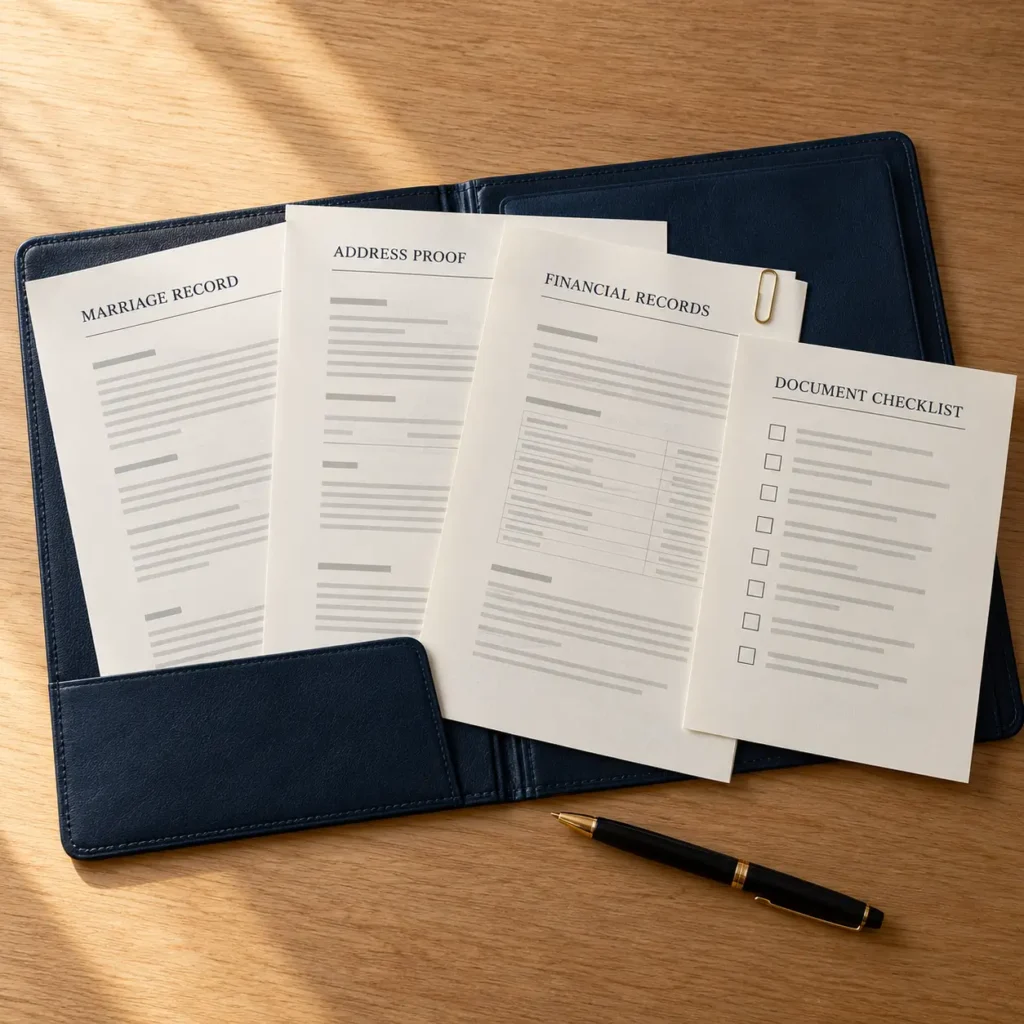
What Documents Do You Need for an SLP or Matrimonial Transfer Petition?
The documents needed for Supreme Court matrimonial proceedings depend on the petition and previous litigation. Proper records are important for establishing the legal grounds and satisfying filing requirements. Our team identifies the necessary documents and prepares the relevant filing papers.
Commonly Required Documents Include:
- High Court Judgment: The decision being challenged through an SLP.
- Previous Court Records: Relevant Family Court and High Court orders, petitions, and replies.
- Case Information: Court names, case numbers, judgment dates, and party details.
- Synopsis and List of Dates: A chronological summary of previous proceedings.
- Supporting Documents: Records relevant to the legal grounds or proposed transfer.
- Affidavits and Applications: Required verification and supporting procedural papers.
- Authorisation Documents: Vakalatnama and documents needed for filing through an AOR.
Not every document is required for every proceeding. We review the records already available and identify additional papers needed for the proposed petition. The responsible Advocate-on-Record must ensure the filing complies with the Supreme Court Rules.

Why Consider G.S. Bagga & Associates for Your Supreme Court Matrimonial Matter?
At G.S. Bagga & Associates, we understand that further matrimonial litigation can involve significant emotional and financial concerns. Clients may already have spent years dealing with divorce, maintenance, or custody proceedings. Our approach focuses on explaining the legal position and preparing the necessary work carefully.
Our practice is led by Advocate Gagandeep Singh Bagga and draws on over 20 years of combined family-law experience. We handle matrimonial disputes involving divorce, maintenance, child custody, and connected proceedings before the appropriate courts.
What You Can Expect From Our Legal Team:
- Clear Case Assessment: Review of the judgment, legal issues, and available remedies.
- Focused Legal Preparation: Petitions drafted around the grounds requiring judicial consideration.
- Organised Documentation: Preparation of relevant court records and applications.
- Procedural Guidance: Explanation of filing requirements, deadlines, and next steps.
- Professional Communication: Clear information about the scope of legal work and procedural developments.
Our team explains the available legal options without promising a particular judicial outcome. Supreme Court filing and representation arrangements are confirmed according to the matter undertaken.
What to Prepare Before Discussing Your Matrimonial Case
You do not need every court document ready before making an enquiry. However, a few essential details can help our team understand your matrimonial matter and identify the legal procedure that may apply.
- Latest Judgment or Court Notice: Keep the available High Court judgment or pending case notice.
- Case Number and Important Dates: Note the original court, case number, and judgment date.
- Pending Proceedings: Identify where your matrimonial case is currently being heard.
- Relief You Want: Explain whether you seek an SLP, interstate transfer, or interim protection.
Frequently Asked Questions About Divorce and Matrimonial Cases in the Supreme Court
Can I File for Divorce Directly in the Supreme Court of India?
Generally, no. A new divorce petition must ordinarily be filed before the competent Family Court. The Supreme Court handles matrimonial matters involving Special Leave Petitions (SLPs), interstate case transfers, and certain constitutional remedies. At G.S. Bagga & Associates, we help identify the appropriate court and legal procedure for your matrimonial matter.
Can I Challenge a High Court Divorce Judgment in the Supreme Court?
Yes. You may challenge a High Court divorce judgment through a Special Leave Petition under Article 136 if there are grounds for the Supreme Court’s intervention. However, the Court decides whether to grant special leave. We review the judgment, identify potential legal errors, and prepare the necessary petition and supporting documents.
What Is the Time Limit for Filing a Divorce SLP in the Supreme Court?
A civil Special Leave Petition ordinarily must be filed within 90 days of the judgment or order being challenged. A 60-day period applies in specified certificate-refusal cases. Legally permitted exclusions may affect the deadline, and delayed filing requires justification. Our team can review the relevant dates and filing requirements.
Can I Transfer My Divorce Case From One State to Another Through the Supreme Court?
Yes. Under Section 25 CPC, the Supreme Court can transfer eligible matrimonial proceedings between states when the interests of justice require it. Both husbands and wives may request a transfer. We prepare transfer petitions, supporting affidavits, and relevant documents based on the pending proceedings and legal grounds.
Will Filing an SLP Stop My Maintenance or Child Custody Order?
No. Filing an SLP does not automatically suspend an existing High Court judgment or order. If the decision affects maintenance payments, custody, or visitation arrangements, interim relief may need to be requested. We review the order and prepare the necessary request where legally justified. The Supreme Court decides whether protection should be granted.
Can the Supreme Court Grant Divorce Without My Spouse's Consent?
Yes, in exceptional circumstances. Under Article 142 of the Constitution, the Supreme Court may dissolve an irretrievably broken marriage even without the other spouse’s consent. The decision in Shilpa Sailesh v. Varun Sreenivasan (2023) explains this power. However, such relief is discretionary and cannot be claimed as an automatic right.
What Documents Are Needed to File an SLP or Matrimonial Transfer Petition?
The documents depend on the proceedings. Common requirements include the latest court judgment, case number, previous orders, relevant petitions, supporting evidence, affidavits, and authorisation papers. An SLP also requires prescribed filing documents, including a synopsis and list of dates. We review available records and identify the documents necessary for the proposed petition.
Do I Need an Advocate-on-Record to File a Supreme Court Matrimonial Case?
Represented litigants ordinarily need an Advocate-on-Record (AOR) to file and act before the Supreme Court. Other advocates may participate according to the Court’s rules. At G.S. Bagga & Associates, we can explain the required filing procedure and address the legal preparation and AOR arrangements for matters undertaken by our team.
Understand Your Supreme Court Matrimonial Options With G.S. Bagga & Associates
If you are considering a Special Leave Petition, an interstate matrimonial transfer, or another Supreme Court remedy, the first step is to understand the existing judgment and legally available procedure. Our team can examine your case, identify the required documents, and explain the work necessary for further proceedings.
At G.S. Bagga & Associates, we provide matrimonial case assessment, petition preparation, document review, and legal guidance for matters within our practice. Contact our team to discuss the available procedure and applicable consultation arrangements.
Prefer WhatsApp? Use the chat option to message us directly
