

Family law Specialists
Experienced Divorce Lawyer in Delhi High Court
You have already spent time, money, and energy fighting your case in Family Court. Now, a divorce judgment, maintenance order, or child custody decision may have left you feeling unheard or uncertain about your future. But an unfavourable Family Court decision does not always mean your legal options are over.
If you believe important evidence was overlooked or the law was incorrectly applied, you may have grounds to challenge the decision before the Delhi High Court. An appeal under Section 19 of the Family Courts Act ordinarily has a 30-day filing deadline, subject to applicable limitation rules.
At G.S. Bagga & Associates, we handle divorce disputes and matrimonial appeals before the appropriate courts in Delhi. If you are looking for a divorce lawyer in Delhi High Court, we can review the Family Court judgment, examine possible legal errors, prepare appeal petitions, and represent you in court proceedings.
- 20+ Years of Combined Family Law Experience
- Matrimonial Appeals
- Legal Representation
Prefer WhatsApp? Use the chat option on our website for a brief enquiry.
Request a Private & Confidential Consultation
Your privacy is our priority. All discussions are strictly protected under advocate-client confidentiality.
Understand Jurisdiction
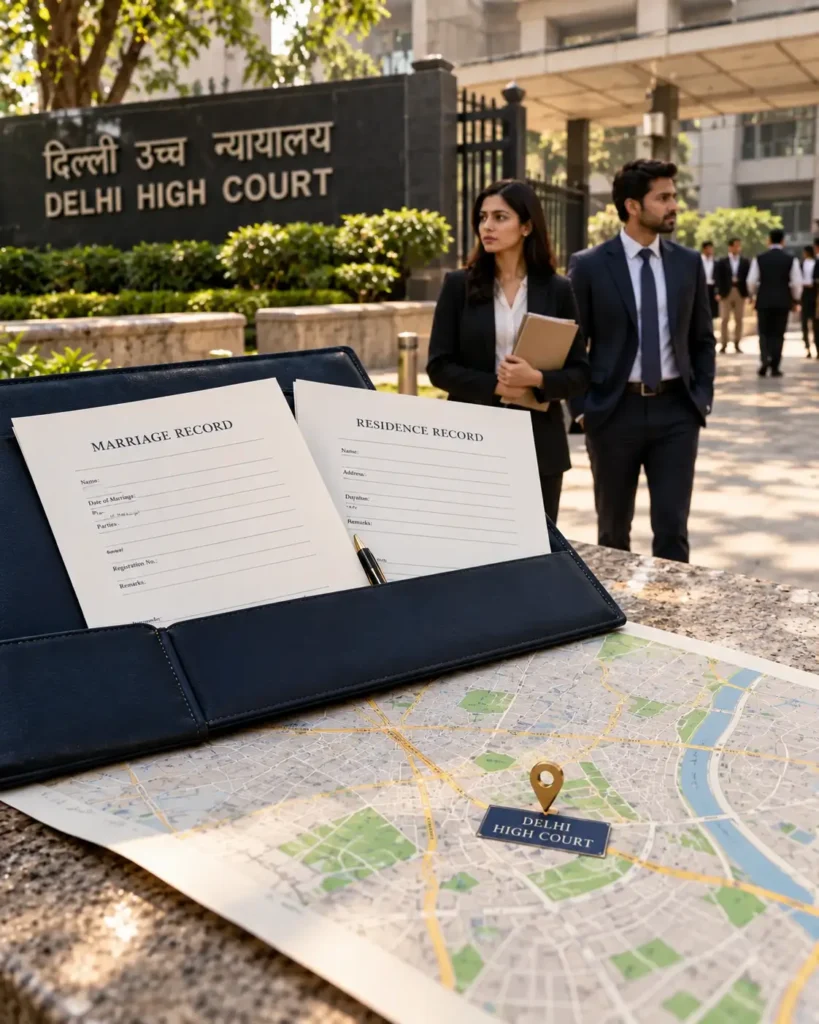
Who Can Appeal a Family Court Order in Delhi High Court?
Receiving a judgment against your expectations can be difficult, especially after months or years of matrimonial proceedings. You may feel that important facts were overlooked or that your concerns were not properly addressed.
A spouse affected by an appealable Family Court judgment or order may approach the Delhi High Court under Section 19 of the Family Courts Act, 1984.
An appeal may be available in the following situations:
- Divorce Petition Dismissed: The Family Court rejected your petition, and you believe there are legal grounds to challenge the judgment.
- Divorce Granted Against You: Your spouse obtained a divorce decree that you believe contains legal or factual errors.
- Disputed Maintenance or Alimony: A financial order may be challenged through the remedy permitted under the applicable law.
- Child Custody or Visitation Decision: An appealable order affecting your child’s care or your contact with them may be challenged.
- Other Matrimonial Orders: Certain decisions affecting substantive legal rights may be appealable, depending on their nature.
Can Every Family Court Order Be Appealed?
No. Section 19 restricts ordinary appeals against consent decrees and merely interlocutory orders.
However, an order passed while proceedings are continuing is not automatically interlocutory. Its legal nature and effect on the parties’ rights must be examined.
If an ordinary appeal is unavailable, another legal remedy may sometimes exist. We review the decision and explain whether an application before the original court, revision, or another permitted procedure should be considered.
Our Practice Areas
Matrimonial and Divorce-Related Matters We Handle
A Family Court judgment can leave important questions unresolved. You may be concerned about financial responsibilities, your relationship with your children, or the legal status of your marriage.
Our team examines these issues, identifies possible grounds for challenge, and prepares the proceedings permitted under the applicable law.

Mutual Consent Divorce
When both spouses agree to end their marriage, they may present a joint petition under Section 13B of the Hindu Marriage Act. They generally must have lived separately for at least one year and meet the other statutory conditions. We assist with joint petitions, settlement terms, and first- and second-motion formalities. Read our mutual consent divorce guide.
Contested Divorce Proceedings
When one spouse does not agree, the other may seek divorce on recognised legal grounds. Section 13 of the Hindu Marriage Act includes cruelty, adultery, and desertion for the required period. We review relevant facts, prepare petitions or replies, organise evidence, and assist with hearings and arguments. Learn about divorce without mutual consent.
Child Custody & Visitation
Worried about where your child will live or how often you can meet them? Courts consider the child’s welfare when deciding custody and visitation. We assist with interim custody applications, visitation requests, and documents concerning the child’s care and needs. Learn more about child custody in India.
Maintenance and Alimony
Financial support may be needed during or after matrimonial proceedings. Eligible spouses can seek interim maintenance, litigation expenses, or permanent alimony under Sections 24 and 25 of the Hindu Marriage Act. We assist with financial disclosures, applications, and responses to disputed maintenance claims. Read more about maintenance and alimony.
Interim Relief and Connected Matrimonial Disputes
Some issues need attention before a divorce petition is finally decided. Depending on the facts, separate applications or proceedings may be available.
Our assistance may include:
- Interim Maintenance: Applications under Section 24 of the Hindu Marriage Act or Section 144 BNSS, where applicable.
- Domestic Violence Protection: Applications for protection, residence, or monetary relief under the Protection of Women from Domestic Violence Act, 2005.
- Child Access and Custody: Interim visitation or custody applications, including appropriate directions concerning relocation.
- Connected Complaints: Assistance with matrimonial cruelty complaints under Section 85 BNS or older Section 498A IPC matters, and related police or CAW Cell proceedings where relevant.
These matters may be heard by different courts or authorities. We help identify the appropriate legal procedure and forum.

Questions About Divorce, Child Custody or Maintenance at Delhi High Court
Going through divorce, domestic concerns, child custody, maintenance, or NRI matters will surely confuse you with a lot of questions. So, if you’re not sure of your legal rights, you can talk to a lawyer and understand how things work.
We’re available if you’d like to talk to us or ask us your doubts. We ensure you receive the right legal guidance to better understand your situation.
Get a quick 2 minit consultation
Step By Step
How Does the Matrimonial Appeal Process Work at Delhi High Court?
You may already have spent years dealing with petitions, hearings, and court documents. Starting another proceeding can feel overwhelming when you do not know what it involves.
An experienced Delhi High Court lawyer should explain the filing process, legal grounds, and documents required before preparing an appeal.
Case Review and Jurisdiction Check
We begin by understanding your concerns and examining the Family Court’s decision. Our team reviews the judgment, relevant pleadings, supporting evidence, and relief granted or refused. This helps identify whether there are legally sustainable grounds for challenging the decision.
Drafting Petitions and Applications
We examine the legal issues raised by the judgment and determine whether an appeal is available. The review includes the filing deadline, grounds for challenge, and any need for interim relief. This stage helps establish what can realistically be requested from the High Court.
Draft the Appeal and Supporting Documents
We prepare the memorandum of appeal, relevant affidavits, and supporting applications. The appeal must explain which findings are being challenged and why. We also organise the Family Court record and documents required for filing.
File the Appeal Before Delhi High Court
The appeal is submitted through the High Court’s prescribed filing procedure. The Registry examines the documents and may identify defects requiring correction before registration and listing. Where court fees apply, the prescribed payment details must be provided. We handle the relevant filing work, court-fee formalities, and procedural requirements.
Evidence, Arguments, and Final Order
Appeals under Section 19(1) of the Family Courts Act are heard by a Division Bench consisting of two or more High Court judges. The judges examine the appeal grounds, relevant records, and legal arguments before deciding the matter. We prepare submissions and represent the client’s case. The High Court may uphold, modify, set aside, or issue other lawful directions concerning the challenged decision.
Duration
How Does E-Filing Work in Delhi High Court?
The Delhi High Court allows advocates and parties appearing in person to submit cases and documents through its official online e-filing system. This includes appeals, applications, affidavits, and other permitted court filings.
If you are searching for e filing Delhi High Court, the official portal and current filing rules are available through the Delhi High Court e-Filing page.
What Is Required for Delhi High Court E-Filing?
Depending on the filing, the requirements may include:
- Digital Documents: Properly prepared and searchable PDF files.
- Court Records: Relevant Family Court judgments, pleadings, and supporting documents.
- Document Formatting: Prescribed paper size, scanning, pagination, and bookmarking.
- Court Fees: Applicable court-fee payment details.
- Authorisation: Required signatures, affidavits, and legal representation documents.
As of February 2026, the High Court’s online system permits e-files up to 300 MB under the amended rules. Larger filings require the prescribed alternative procedure.
At G.S. Bagga & Associates, we prepare appeal documents according to the applicable filing requirements and address procedural objections raised during scrutiny.
How Long Does a Divorce Case Take
Divorce timelines depend on the type and complexity of the case, cooperation between spouses, supporting evidence, and court scheduling. The following estimates are provided for general planning and do not represent fixed completion periods.
Timeline for Mutual Consent Divorce
- Expected Duration: Approximately 6–12 months in a straightforward case; potentially 2–4 months if the cooling-off period is waived and formalities proceed smoothly.
- Process Overview: Both spouses file jointly and complete the first and second motions. Their continuing consent is required when the court considers the decree.
- Key Stages Affecting Time:
- Standard Procedure: Section 13B ordinarily provides a six-month interval before the second motion. Filing and hearing dates may extend the total duration.
- Waived Waiting Period: The court may waive that interval under Amardeep Singh v. Harveen Kaur in suitable cases. Approval is discretionary.
Timeline for Contested Divorce
- Expected Duration: Approximately 2–5 years in many cases; complex disputes or appeals may take longer.
- Process Overview: The court considers the petition, reply, relevant applications, evidence, and arguments before deciding the case.
- Key Stages Affecting Time:
- Notice and Preliminary Proceedings: Serving summons, obtaining replies, mediation, and interim applications can affect progress.
- Evidence and Trial: Witnesses, cross-examination, multiple hearings, and adjournments add time. The court may proceed ex parte after proper service and non-appearance, but proof remains necessary.
Documents Required for a Matrimonial Appeal in Delhi High Court
You may be concerned about finding documents from an old Family Court case. You do not need to guess which papers are important.
The required records depend on the judgment and issues being challenged.
Common documents include:
- Family Court Judgment or Order: The decision being challenged, including a certified copy where required.
- Case Details: Case number, Family Court name, judgment date, and party details.
- Original Pleadings: Divorce petition, written statement, replies, and applications.
- Evidence and Court Records: Documents and witness material forming part of the proceedings.
- Financial Documents: Income affidavits, maintenance orders, and financial evidence.
- Child Custody Records: Existing custody, visitation, or related orders.
- Supporting Applications: Stay applications, delay-condonation requests, and other required documents.
- Authorisation Documents: Vakalatnama, affidavits, and other filing papers.
We review available records, identify missing documents, and prepare the papers required for the appeal.
What to Prepare Before Discussing Your Divorce Case
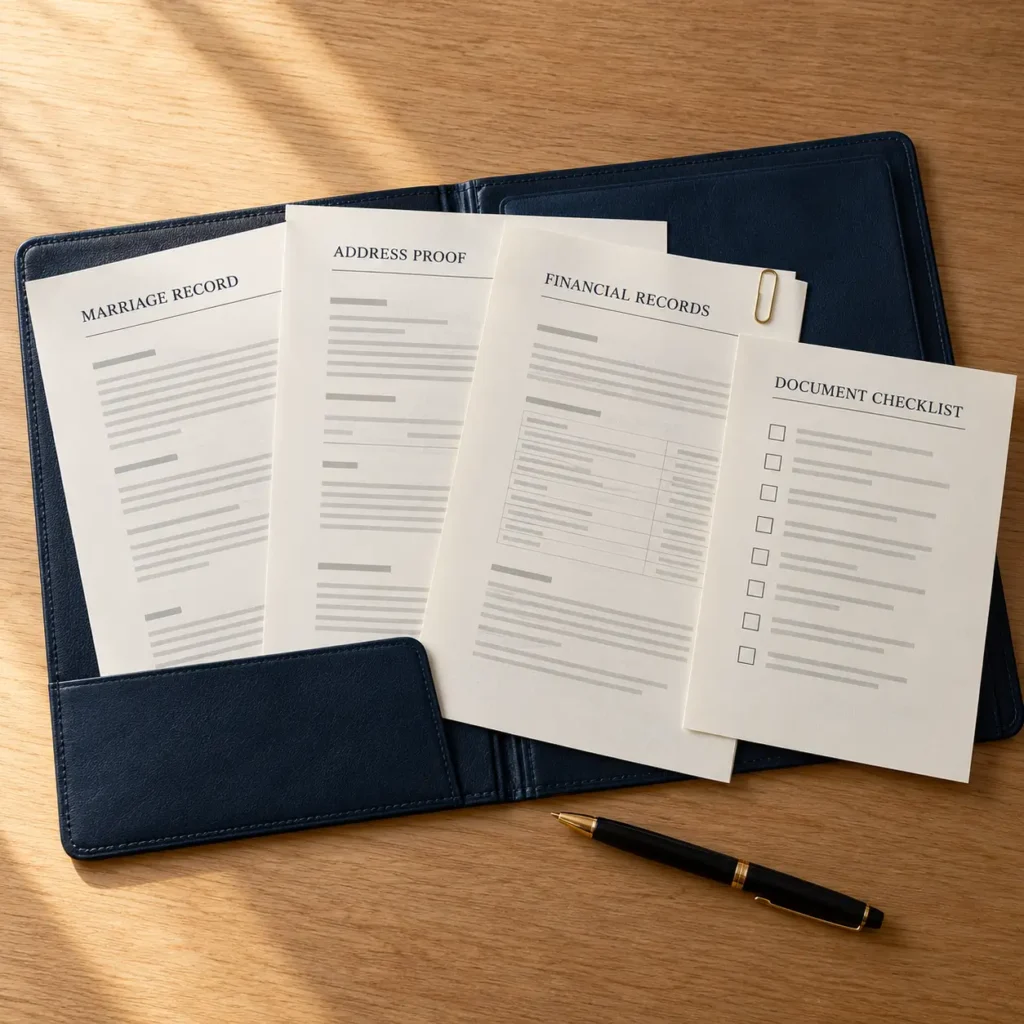
You do not need to have every document ready before making an enquiry. However, a few basic details can help you understand which legal procedure may apply.
1. Keep Your Marriage Details Ready
Note the date and place of marriage. Keep your marriage certificate or other available marriage records accessible.
2. Check Your Residential Details
Identify your current address, your spouse’s address, and where you last lived together. These details may be important for determining jurisdiction.
3. Preserve Relevant Financial Documents
Keep available salary slips, bank statements, income tax returns, and information about assets or liabilities, especially when maintenance is disputed.
4. Choose a Suitable Contact Method
You can call our office or use the website’s WhatsApp chat option for a brief enquiry. Avoid including detailed allegations or sensitive documents in your first message.
How Are Maintenance Claims and Financial Disclosures Handled?
Maintenance proceedings may require disclosure of income, expenses, assets, and liabilities. In Rajnesh v. Neha (2020), the Supreme Court directed parties in maintenance proceedings to file the applicable Affidavit of Disclosure of Assets and Liabilities.
These records help the court assess financial circumstances before deciding relief. We assist with organising financial information, maintenance applications, and responses to claims. Any award depends on the law and evidence.

How G.S. Bagga & Associates Can Handle Your Matrimonial Appeal
At G.S. Bagga & Associates, we understand that a matrimonial appeal is not simply another court filing. Behind the judgment may be years of disagreement, financial pressure, or concern about your children’s future.
Our role is to understand the legal issues, examine the record, and prepare the case supported by the available facts and law. With over 20 years of combined experience in family-law matters, our team handles divorce disputes and related proceedings before the appropriate courts in Delhi.
Our Legal Services Include:
- Judgment Review: Examining Family Court findings and possible grounds for challenge.
- Appeal Assessment: Reviewing appealability, limitation periods, and available remedies.
- Appeal Drafting: Preparing appeal petitions, affidavits, stay requests, and applications.
- Court Record Preparation: Organising pleadings, evidence, financial disclosures, and certified orders.
- High Court Representation: Preparing submissions and handling hearings in matters undertaken by our team.
Our practice is led by Advocate Gagandeep Singh Bagga, founder of G.S. Bagga & Associates. We explain the legal position clearly, discuss potential difficulties, and prepare proceedings according to the circumstances of each case.
Frequently Asked Questions About Delhi High Court Lawyers and Matrimonial Appeals
Can I File for Divorce Directly in Delhi High Court?
Ordinary divorce petitions generally begin before the competent Family Court. The Delhi High Court hears qualifying appeals and other proceedings within its jurisdiction.
Can I Appeal If My Divorce Petition Was Dismissed?
Yes, a dismissed petition may be appealable if the legal requirements are satisfied. The judgment and available grounds should be reviewed before filing.
What If My Spouse Obtained a Divorce Decree Against Me?
An appeal may be possible if the decree is appealable and there are valid grounds for challenge. The Family Court judgment, evidence, and limitation period must be examined.
How Much Time Do I Have to Appeal?
Under Section 19(3) of the Family Courts Act, the ordinary appeal period is 30 days, subject to applicable limitation provisions.
Can an Interim Maintenance Order Be Challenged?
Yes, depending on the applicable law and nature of the order. Delhi High Court precedent recognises Section 19 appeals against certain interim maintenance orders under Section 24 of the Hindu Marriage Act. Other maintenance orders may require a different procedure.
Can a Mutual Consent Divorce Decree Be Challenged?
Ordinary appeals against genuine consent decrees are restricted. If fraud, coercion, or absence of genuine consent is alleged, a different legal procedure may need to be considered.
Will Filing an Appeal Stop the Family Court Order?
No. A separate application for stay or interim relief may be necessary. The High Court decides whether to grant the requested protection.
What If I Missed the Appeal Deadline?
Delay may be condoned where the law permits and sufficient cause is established. The court decides whether the appeal can proceed.
How Do I Find the Best High Court Lawyer in Delhi for a Matrimonial Appeal?
There is no official ranking identifying the best advocate for every matrimonial case. Rather than relying only on lists of the best Delhi High Court lawyers, review relevant appellate experience, understanding of matrimonial law, professional credentials, communication, and fee arrangements.
Is a Delhi High Court Vakil Different From an Advocate?
There is no official ranking identifying the best advocate for every matrimonial case. Rather than relying only on lists of the best Delhi High Court lawyers, review relevant appellate experience, understanding of matrimonial law, professional credentials, communication, and fee arrangements.
Can an Advocate in Delhi High Court Handle Family Court Appeals?
Yes. An advocate practising before the Delhi High Court can represent parties in matrimonial appeals, subject to the applicable procedural requirements. Appeals under Section 19(1) of the Family Courts Act are heard by a Division Bench.
Can I File a Matrimonial Appeal Online in Delhi High Court?
Yes. The High Court provides an online e-filing facility for permitted appeals and applications. Documents must satisfy the prescribed electronic filing rules, and Registry objections must be corrected where required.
Where Is Delhi High Court Located?
The High Court of Delhi is located on Sher Shah Road, near India Gate, New Delhi.
You can check case status, cause lists, judgments, and other court information on the official Delhi High Court website.
Understand Your Matrimonial Appeal Options With G.S. Bagga & Associates
A Family Court decision may have left you with questions about your legal rights and what happens next. Understanding whether an appeal is available, how much time remains, and which documents matter can help you decide your next step.
At G.S. Bagga & Associates, we examine matrimonial judgments, prepare appeals and related applications, and represent clients in proceedings before the Delhi High Court.
Prefer WhatsApp? Use the chat option on our website for a brief enquiry.
