

Divorce Lawyer in Delhi for Mutual & Contested Divorce
When a marriage reaches a point where it cannot go on, the next step should not feel like another fight. If you are looking for a divorce lawyer in Delhi, you need someone who will first hear your facts, whether both of you agree to separate or only one of you wants out, and then explain the court, the papers and the settlement before anyone files.
A G.S. Bagga & Associates, we represent clients in mutual consent divorce, contested divorce, alimony, child custody and NRI matrimonial disputes before Delhi Family Courts, the Delhi High Court and across Delhi NCR. We treat your matter with confidentiality, subject to law. The advice is in simple language. The aim is a path you can actually live with.
Divorce Lawyer in Delhi for Matrimonial & Family Law Matters
Divorce is not only a petition. Along with it come questions of where you will live, how the children will be looked after, what maintenance is payable, what happens to jewellery and the house, and whether a CAW Cell complaint, a cruelty case under BNS Sections 85 and 86 (earlier IPC 498A), or a Domestic Violence Act case is already going on.
A matrimonial lawyer in Delhi should sort these questions before anyone files. Some couples can end the marriage by mutual consent under Section 13B of the Hindu Marriage Act, 1955, or Section 28 of the Special Marriage Act, 1954. Others must prove a legal ground in a contested case under Section 13 of the HMA. NRI families also need the correct court, not merely the nearest office.
G.S. Bagga & Associates is a family law practice led by Mr. G.S. Bagga, with over 20 years of experience in divorce and matrimonial work. If you are looking for the best divorce lawyer in Delhi look for regular appearances in Delhi Family Courts, honest advice on mutual versus contested, and one strategy for the civil case and any connected criminal matter.
Do not rush the first filing. Speak to a divorce advocate in Delhi first.
Divorce & Matrimonial Legal Services in Delhi
We handle the matrimonial matters that usually travel with a divorce case in Delhi.

Mutual Divorce
Mutual consent divorce is for a husband and wife who both agree that the marriage is over and wish to part with dignity. You should usually have been living separately for at least one year. A joint petition is filed in the Family Court. Statements are recorded at the First Motion, and there is usually a six-month cooling-off period before the Second Motion and the decree. That cooling-off period may be waived depending on the circumstances of the case and the court’s discretion. A mutual divorce lawyer in Delhi should first put maintenance, custody, stridhan and property in writing.
Contested Divorce
A contested divorce is filed when one spouse wants to end the marriage and the other does not. You must prove a legal ground under the Act that applies to the marriage. Section 13 of the HMA sets out grounds such as cruelty, desertion, adultery, conversion and unsoundness of mind. Cruelty can include physical or mental cruelty. Dowry-related facts may support a cruelty case, but the criminal offence of cruelty over dowry is separate, under BNS Sections 85 and 86 (earlier 498A). Desertion is leaving without consent or reasonable cause for two years or more. Adultery remains a civil ground even though it is no longer a criminal offence. Section 27 of the SMA has corresponding grounds. They are similar, but they are not the same list. A divorce advocate in Delhi should also plan interim maintenance, custody, and any parallel BNS 85/86 (498A) or Domestic Violence Act matter.
NRI Divorce
NRI divorce is for couples where one spouse lives abroad and cannot attend every Delhi hearing. A matrimonial lawyer in Delhi can help with a Power of Attorney, video briefing and service of summons. A POA does not automatically allow a spouse to skip personal appearance. Family Courts often still require the husband and wife to appear in person or by video, especially in mutual consent. A foreign judgment is conclusive under Section 13 of the Civil Procedure Code as to the matter decided between the same parties, unless a statutory exception applies. Those exceptions include want of jurisdiction, a decision not on merits, proceedings opposed to natural justice, fraud, or a claim founded on a breach of Indian law. Whether a foreign divorce dissolves a marriage governed by Indian personal law still depends on the facts and the applicable law.
Mutual Consent Divorce vs Contested Divorce
Mutual consent | Contested | |
Law | HMA s.13B / SMA s.28 | HMA s.13 / SMA s.27 |
Who files | Both spouses, jointly | One spouse |
What you must show | Separation, free consent, complete settlement | A legal ground, with evidence |
Typical time in Delhi | Usually shorter if the settlement is complete | Usually longer, depending on evidence and connected cases |
Best when | Money, children and property are already agreed | Consent is refused, or there is violence, hidden assets, or delay is unsafe |
Mutual consent is usually faster, cheaper and quieter, but only when consent is free and the settlement is complete. Contested is not the “aggressive” option. It is often the practical route when the other side will not sign. A divorce lawyer in Delhi should tell you which path you actually have, not which one sounds easier. Many contested cases later become mutual consent once interim orders and a real settlement are on the table.
Not sure which route applies to you? Call +91 93157 52583 or write to [email protected] for a confidential consultation.
Process & nProcedure
Divorce Process in Delhi: What to Expect
Mutual consent and contested divorce follow different paths in the Family Court. Feeling nervous is natural. These are the steps a divorce lawyer in Delhi will usually take you through, with extra steps that apply only in a contested matter.

Consult a Divorce Lawyer
Speak to a lawyer before you file, shift a child, empty a joint account, or go to CAW Cell. Your facts decide mutual versus contested, and which Family Court has jurisdiction.
File the Divorce Petition
The petition is filed in the Family Court. In a mutual case, both husband and wife sign it. In a contested case, it sets out the grounds and the relief you want.
Court Issues Notice
The other spouse is called on a fixed date. In mutual divorce both parties are already before the court, so this step is shorter.
Attempt at Mediation
Delhi Family Courts may refer the couple to mediation. If the parties reach a settlement, the court may dispose of the matter on those terms.




Filing of Replies
In a contested case, the other spouse files a written reply. Both versions then sit on the court record.
Interim Orders
Temporary maintenance, custody or protection can be granted while the main case is going on.
Evidence and Arguments
Documents, witnesses and cross-examination, then final arguments.
Final Decree
If the court is satisfied, it passes the decree. Collect the certified copy. That order legally ends the marriage.




Papers to keep ready
marriage certificate or Nikahnama, ID and address of both spouses, photographs, proof of separate residence, income proofs if money is in issue, children’s birth certificates, a list of assets, jewellery and loans, and for mutual cases, the draft settlement.
Which Family Court can hear the petition depends on where the marriage was solemnised, where the respondent resides, where the parties last lived, or where the wife resides if she is the petitioner. Appeals may go to the Delhi High Court.
You generally cannot file for divorce within the first year of marriage (Section 14 HMA; Section 29 SMA), unless the court allows it for exceptional hardship or depravity.
Alimony, Maintenance & Child Custody in Divorce
Money and children often need as much care as the divorce petition itself.
Maintenance. Depending on the applicable law and its statutory requirements, a spouse may be able to seek interim support while the case is going on and permanent alimony after the decree. The court does not apply a fixed percentage. It will usually look at what each of you earns, what the married life looked like, who is looking after the children, and whether someone is hiding income. If orders are ignored, they can be enforced through attachment and contempt, so the amount on paper has to be realistic.
Custody. The welfare of the child is the paramount consideration. Joint parenting is common where both parents are fit. Sole custody is used where safety, neglect or instability is proved. Interim custody decides where the child lives during the case, and that arrangement often shapes the final order. School, health decisions and holiday access should be written down, not left as “we will see”.
How the two connect. A parent who is denied access, or a spouse who is left without support, will often not sign a mutual consent petition. Settling maintenance and custody first can make mutual consent more realistic. If those terms cannot be agreed, a divorce advocate in Delhi should move interim applications at once, rather than waiting for the final decree.

Have Questions About Your Situation?
Going through divorce, domestic concerns, child custody, maintenance, or NRI matters will surely confuse you with a lot of questions. So, if you’re not sure of your legal rights, you can talk to a lawyer and understand how things work.
We’re available if you’d like to talk to us or ask us your doubts. We ensure you receive the right legal guidance to better understand your situation.
How Much Time Does It Take to Get a Divorce in India?
There is no fixed timeline for a divorce case. It all depends on whether you choose a mutual divorce or a contested divorce. A mutual divorce is quicker and simpler. A contested divorce takes longer because both sides have to present evidence and arguments before the court. That said, the law does have some general rules and exceptions that every couple should know before filing.
General Rules
No Divorce Within One Year
If you just got married and are already thinking about divorce, the law asks you to wait. Under Section 14 of the Hindu Marriage Act and Section 29 of the Special Marriage Act, you cannot file for divorce within the first year of marriage. The court expects both husband and wife to give the marriage a fair chance. This rule also exists to protect the welfare of any children involved.
Mutual Divorce Waiting Period
If both husband and wife agree to separate, they still have to wait for 6 months after filing their joint petition. The court uses this time to make sure both sides are genuinely sure about their decision. Only after this waiting period can the court pass the final divorce order under Section 13B of the HMA and Section 28 of the SMA. In simple terms, a mutual divorce can take anywhere from 6 months to 1.5 years. A contested divorce can take 1 to 3 years or more depending on how complicated the case is.
Exceptions
Exceptional Hardship or Depravity
The one-year waiting rule has two exceptions. If staying in the marriage is causing you extreme suffering, or if your husband or wife is behaving in a way that is shockingly cruel or morally unacceptable, the court may allow you to file for divorce before completing one year of marriage.
Waiver of the Cooling-Off Period
The Supreme Court of India, in the landmark case of Amardeep Singh v. Harveen Kaur, ruled that the 6-month waiting period in mutual divorce is not always compulsory. The court can skip this period if:
- All efforts at mediation and reconciliation have already failed
- All disputes on child custody, alimony, and property have been fully resolved
- The waiting period would come in the way of a peaceful settlement
- The husband and wife have already been living separately for more than 18 months
These exceptions are not available to everyone. Courts grant them only in genuinely rare and serious situations where waiting would cause more harm than good.
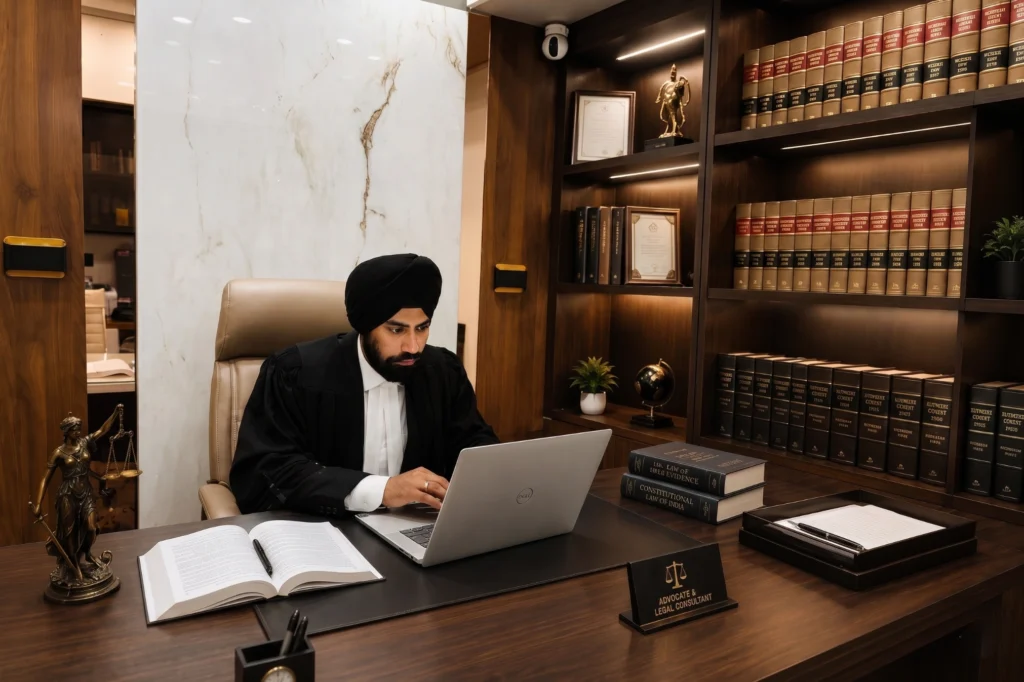
Why Choose G.S. Bagga & Associates for Divorce Matters?
G.S. Bagga & Associates is a divorce law firm in Delhi. They have expertise with family matters like divorce, maintenance, and child custody in Delhi High Court, District Courts, and Family Courts across Delhi NCR.
The firm is led by Mr. G.S. Bagga, who has over 20 years of experience in divorce cases. The team gives simple and clear legal advice to people going through such situations.
Divorce Lawyer Serving Delhi & Delhi NCR
A divorce lawyer in Delhi NCR must first answer where the case should be filed. Delhi is not always the right forum for a couple living in Gurugram, Noida, Faridabad or Ghaziabad, and a local NCR Family Court is not always safer than Delhi. Section 19 of the Hindu Marriage Act decides jurisdiction: place of marriage, respondent’s residence, last shared residence, or the wife’s residence if she is the petitioner. Special rules apply when the other spouse is abroad.
We appear for clients from across Delhi and the NCR, including South Delhi, West Delhi, Rohini, Dwarka, and families who last lived together in the city but now sit in another State or overseas. NRI matters add vakalatnama, video consultation, service of summons abroad, and whether a foreign decree will be recognised in India.
If you are in Delhi NCR and are not sure which court will take the petition, that is a first-consult question, not something to guess after you have already filed.
Documents Required for Divorce In India
To apply for a mutual divorce, you will need certain basic documents:
- Marriage Certificate: A valid and authorised proof of your marriage, such as a court marriage certificate, a Hindu marriage certificate, or Nikahnama.
- Address Proof: Evidence that will include both your addresses, like an address in your Aadhar card, passport, or voter’s ID.
- Pictures: Recent pictures in passport size and wedding photographs of both spouses.
- Income Evidence: Documents such as salary slips, account statements which will prove that both of you have an income source.
- Separation Evidence: All evidence that can prove that both of you have been living separately, for example, court orders, separate bills, messages and affidavit.
- Memorandum of Understanding: A written agreement is signed by both of you regarding maintenance, child custody and property.
Frequently Asked Questions About Divorce in Delhi
What documents are needed to file a divorce petition in Delhi?
Marriage certificate, identity and address proof of both parties, photographs, and, in a contested case, documents that support your grounds. Mutual cases also need the settlement agreement.
How long does a contested divorce take in Delhi?
Most contested cases take 1 to 3 years or more, depending on custody, maintenance, property, the number of hearings, and whether anyone appeals.
Can a mutual divorce lawyer in Delhi skip the 6-month wait?
It may be waived, depending on the circumstances of the case and the court’s discretion. It is not a right, and it is not granted on a fixed checklist.
Can I file for divorce in Delhi if my marriage happened in another city?
Yes, under Section 19 of the HMA, if you last lived in Delhi, the respondent lives here, or the wife resides here. A divorce lawyer in Delhi NCR can confirm the correct court before you file.
What happens to children when divorce proceedings are going on?
Either parent can apply for an interim custody order. The court decides temporary care on the welfare of the child, not on who filed first.
Can I claim maintenance while the divorce case is still in court?
Under Section 24 of the HMA, a spouse who meets the statutory requirements may seek interim maintenance, having regard to income, needs and the cost of fighting the case.
Do I need a divorce advocate in Delhi, or can I file myself?
You may appear in person, but Delhi Family Courts have strict steps for drafting, evidence and cross-examination. Hiring a qualified advocate reduces avoidable mistakes.
What if my spouse gets a divorce decree abroad?
A foreign judgment is conclusive under Section 13 of the Civil Procedure Code as to the matter decided between the same parties, unless a statutory exception applies. Those exceptions include want of jurisdiction, a decision not on merits, proceedings opposed to natural justice (including no fair hearing), fraud, or a claim founded on a breach of Indian law. Whether that decree dissolves a marriage governed by Indian personal law still depends on the facts and the applicable law.

Discuss Your Divorce Matter With a Lawyer
If you need a divorce lawyer in Delhi for mutual consent, contested divorce, custody, maintenance or an NRI family dispute, speak to us before you file. Bring marriage proof, any police or CAW papers, and a short timeline of separation.
We will tell you whether mutual consent is realistic, which court has jurisdiction, and what should be protected before the other side files first. You are welcome to reach out to the divorce lawyers at G.S. Bagga & Associates. We are available for initial enquiries and will give you a clear picture of where you stand.
You are welcome to reach out to our divorce lawyers at G.S. Bagga and Associates. We are available for initial enquiries and will do our best to give you a clear picture of where you stand.
